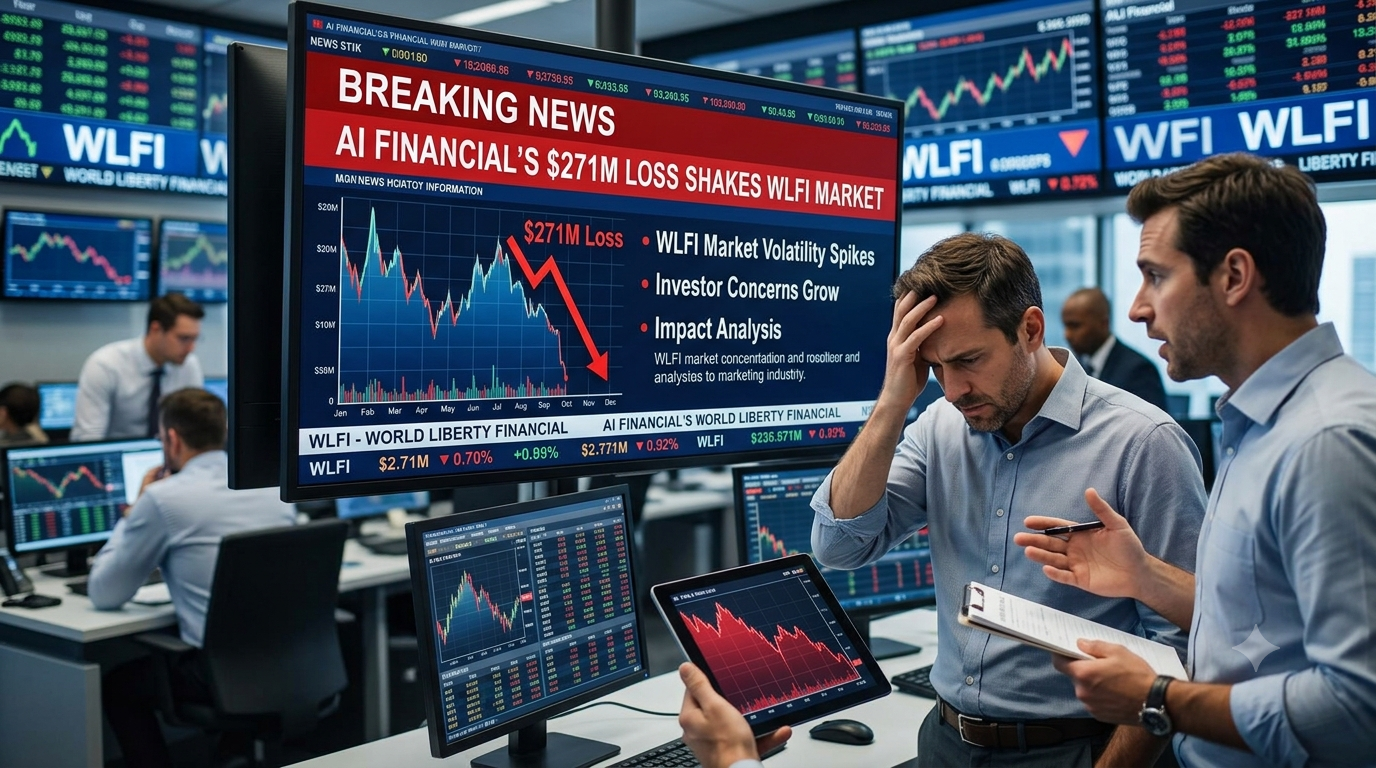
The digital finance industry continues to experience dramatic highs and lows, but recent developments surrounding AI Financial and the declining value of WLFI have drawn significant attention from investors and analysts alike. Reports that AI Financial posted a staggering $271 million loss while the value of WLFI continued to slide have intensified concerns about the sustainability of certain crypto-linked financial ecosystems.
Over the past few years, companies operating at the intersection of artificial intelligence, blockchain technology, decentralized finance (DeFi), and crypto investment platforms have attracted enormous capital inflows. Many firms positioned themselves as innovators capable of reshaping traditional banking and investment systems. However, volatile market conditions, reduced investor confidence, and liquidity pressures are now exposing the risks hidden beneath rapid expansion strategies.
The latest AI Financial results have become a major talking point across the cryptocurrency industry because they highlight how quickly market sentiment can shift. The collapse in WLFI valuation has not only affected balance sheets but has also triggered broader debates about digital asset regulation, risk management, and long-term viability.
This article explores the reasons behind AI Financial’s massive loss, examines why WLFI value has declined so sharply, analyzes the broader market impact, and discusses what the future may hold for crypto-focused financial companies.
Understanding AI Financial’s Business Model
AI Financial emerged as a fast-growing player within the digital finance and blockchain investment sector. The company built its reputation by combining AI-driven financial analytics with crypto investment opportunities, promising smarter portfolio management and advanced predictive tools for investors.
Its ecosystem reportedly included:
- AI-powered trading infrastructure
- Blockchain asset management services
- Exposure to decentralized finance protocols
- Investments tied to WLFI and related digital assets
- Yield-generation products linked to crypto liquidity pools
The company marketed itself as a bridge between traditional finance and emerging technologies. During the crypto market boom, this strategy attracted institutional and retail investors looking for exposure to high-growth digital assets.
However, the recent $271 million loss indicates that the company’s aggressive expansion strategy may have left it vulnerable to market downturns.
Why AI Financial Reported a $271M Loss
The reported $271 million loss did not occur because of a single event. Instead, multiple factors appear to have combined to create severe financial pressure on the company.
Declining WLFI Value
One of the primary reasons behind the losses was the sharp decline in WLFI value. Since AI Financial reportedly held significant exposure to WLFI-linked assets, the falling token price directly affected the company’s balance sheet.
Digital asset volatility can dramatically reduce portfolio valuations within short periods. If a company maintains substantial holdings in a declining token, unrealized losses can quickly escalate into major financial setbacks.
The WLFI slide appears to have triggered:
- Asset write-downs
- Reduced collateral value
- Lower investor confidence
- Liquidity concerns
- Increased redemption pressure
As WLFI weakened, AI Financial’s exposure amplified the damage.
Weak Crypto Market Conditions
The broader cryptocurrency market has also experienced periods of uncertainty. Bitcoin and altcoin volatility often impacts investor sentiment across the entire blockchain ecosystem.
Several macroeconomic factors contributed to weaker market conditions:
Higher Interest Rates
Global central banks maintaining elevated interest rates have reduced risk appetite among investors. Speculative assets such as cryptocurrencies typically suffer when borrowing costs rise.
Reduced Venture Capital Activity
Crypto startups once enjoyed abundant venture capital funding. However, many investors have recently become more cautious, leading to tighter liquidity across the industry.
Regulatory Uncertainty
Governments and financial regulators continue debating how digital assets should be supervised. This uncertainty has created hesitation among institutional investors.
For companies like AI Financial, these broader market conditions added further stress to already declining asset valuations.
The Role of WLFI in the Financial Crisis
WLFI appears to have played a central role in AI Financial’s losses. Understanding the connection between the two helps explain why the company faced such a severe downturn.
What Is WLFI?
WLFI is associated with the broader decentralized finance ecosystem and has been promoted as part of a digital asset infrastructure focused on blockchain-based financial innovation.
Its use cases reportedly included:
- Governance participation
- DeFi liquidity operations
- Staking mechanisms
- Yield rewards
- Ecosystem transactions
Like many crypto assets, WLFI’s value depended heavily on market confidence, trading activity, and ecosystem adoption.
Why WLFI Value Slid
Several possible factors contributed to the decline in WLFI value.
Investor Sell-Offs
Once market sentiment weakened, large holders may have started selling WLFI tokens to reduce exposure. Heavy selling pressure can rapidly accelerate price declines.
Liquidity Problems
Lower trading liquidity can increase volatility. If buyers disappear during periods of panic selling, token prices can collapse quickly.
Concerns About Sustainability
Investors may also have questioned the sustainability of WLFI’s ecosystem economics. In crypto markets, confidence is often tied to long-term utility and adoption.
Broader DeFi Weakness
The decentralized finance sector has experienced reduced user activity compared to earlier growth cycles. Declining yields and lower speculative interest have impacted many DeFi-related tokens.
As WLFI weakened, AI Financial’s exposure transformed into a major liability.
How Investors Reacted to the News
Investor reaction to the reported $271 million loss was immediate. Market participants closely monitor the financial health of firms involved in blockchain investments because losses can spread across interconnected ecosystems.
Falling Confidence
One of the biggest consequences of major losses is declining investor confidence. Once confidence weakens, capital inflows typically slow down.
Investors may fear:
- Additional hidden losses
- Liquidity shortages
- Insolvency risks
- Asset liquidation pressure
- Operational instability
Even rumors of financial instability can trigger panic within crypto markets.
Increased Market Volatility
The AI Financial news also contributed to heightened volatility in related digital assets. Traders often react emotionally to major financial headlines, causing sharp price swings.
Volatility can create a cycle where falling prices trigger further liquidations, which then push prices even lower.
Institutional Concerns
Institutional investors are particularly sensitive to risk management failures. Large losses raise questions about whether companies adequately hedged their exposure to volatile crypto assets.
If institutions lose confidence, access to funding and liquidity may become even more difficult for affected firms.
The Bigger Problem Facing Crypto Finance Companies

AI Financial’s situation reflects broader challenges facing the crypto-finance industry.
Overreliance on Token Valuations
Many blockchain companies depend heavily on token appreciation to maintain growth. When token prices rise, balance sheets appear strong. However, downturns can quickly expose structural weaknesses.
This dependence creates several risks:
- Revenue instability
- Liquidity vulnerabilities
- Excessive leverage
- Weak cash-flow fundamentals
- Asset concentration risk
The WLFI decline demonstrates how rapidly conditions can deteriorate.
Aggressive Expansion Strategies
During bullish periods, many crypto companies expanded aggressively by hiring rapidly, launching new products, and increasing market exposure.
However, fast expansion often creates high operating costs that become difficult to sustain during downturns.
Lack of Mature Risk Controls
Traditional financial institutions usually maintain strict risk management frameworks. Some crypto-focused companies, however, have prioritized growth over stability.
Without effective controls, exposure to volatile assets can become dangerous.
Could Regulation Change the Industry?
The AI Financial loss may increase calls for stronger cryptocurrency regulation. Regulators worldwide are already scrutinizing digital asset markets more closely following multiple industry collapses.
Greater Transparency Requirements
Authorities may require companies to provide clearer disclosures regarding:
- Asset reserves
- Token exposure
- Liquidity positions
- Leverage levels
- Risk management strategies
More transparency could help investors make informed decisions.
Stricter Capital Standards
Regulators could also introduce capital reserve requirements for crypto-finance firms. These rules would aim to reduce systemic risk.
Enhanced Consumer Protection
Retail investors often face significant risks in volatile digital asset markets. Governments may implement stricter consumer protection measures to prevent misleading marketing and excessive speculation.
While some crypto advocates oppose increased regulation, others argue that clearer rules could improve long-term industry stability.
The Impact on the DeFi Ecosystem
The decline in WLFI value and AI Financial’s losses may also affect the broader decentralized finance ecosystem.
Reduced Liquidity Across Platforms
If investors withdraw funds from DeFi platforms, liquidity levels may decline across the sector. Lower liquidity can make markets more volatile and less efficient.
Lower User Participation
Negative headlines often discourage new users from entering the market. Reduced participation can slow innovation and adoption.
Pressure on Yield Products
Many DeFi platforms rely on attractive yields to attract capital. However, declining asset prices and weaker liquidity may force platforms to reduce returns.
This creates additional challenges for maintaining user growth.
Can AI Financial Recover?
Despite the massive reported loss, recovery may still be possible depending on how the company responds.
Restructuring Efforts
AI Financial could attempt to restructure operations by:
- Reducing operating costs
- Selling non-core assets
- Lowering token exposure
- Raising additional capital
- Improving liquidity management
Successful restructuring could stabilize the company over time.
Market Recovery Potential
Crypto markets have historically experienced cycles of boom and bust. If digital asset prices recover, companies with surviving infrastructure may regain momentum.
However, recovery is far from guaranteed.
Rebuilding Investor Trust
Perhaps the biggest challenge will be restoring confidence. Investors want evidence that management understands the risks and has implemented stronger controls.
Transparent communication and disciplined financial management will likely be essential.
Lessons Investors Can Learn From the Crisis
The AI Financial and WLFI situation offers several important lessons for investors.
Diversification Matters
Overexposure to a single asset or ecosystem can be extremely risky. Diversification remains one of the most effective risk management tools.
Volatility Is Inherent in Crypto Markets
Cryptocurrency markets can experience rapid and unpredictable price movements. Investors should always prepare for significant volatility.
Research Is Essential
Before investing in digital asset projects, investors should carefully analyze:
- Token utility
- Liquidity conditions
- Governance structures
- Financial transparency
- Risk exposure
Understanding fundamentals can help reduce unnecessary risks.
Sustainable Business Models Are Critical
Companies that rely purely on speculative growth often struggle during downturns. Sustainable revenue generation and disciplined financial management are crucial for long-term survival.
Future Outlook for WLFI and Digital Assets
The future of WLFI remains uncertain, but several scenarios are possible.
Scenario One: Stabilization
WLFI could stabilize if the ecosystem improves utility, restores investor confidence, and attracts renewed participation.
Scenario Two: Continued Decline
If liquidity weakens further and investor sentiment remains negative, WLFI value may continue declining.
Scenario Three: Industry Consolidation
The broader crypto-finance industry may experience consolidation where stronger firms acquire weaker competitors.
This process could ultimately create a smaller but more stable market environment.
Why the Story Matters Beyond Crypto
Although AI Financial operates within the crypto industry, the story has broader implications for global finance and technology.
The rapid rise and fall of blockchain-focused companies demonstrates how innovation alone cannot eliminate financial risk. Markets still depend on trust, liquidity, and sustainable economics.
The situation also highlights the growing connection between:
- Artificial intelligence
- Digital finance
- Tokenized assets
- Decentralized platforms
- Institutional investment strategies
As these technologies continue evolving, companies will need stronger governance structures to manage increasingly complex risks.
Conclusion
The news that AI Financial posted a $271 million loss as WLFI value slid has become one of the most significant developments in the digital finance sector. The situation underscores the dangers of excessive exposure to volatile crypto assets and highlights the challenges facing companies operating within decentralized finance ecosystems.
Falling investor confidence, weak market conditions, liquidity concerns, and broader regulatory uncertainty all contributed to the crisis. While recovery remains possible, AI Financial now faces the difficult task of rebuilding trust and stabilizing operations.
For investors, the episode serves as a reminder that the cryptocurrency industry still carries substantial risk despite its technological promise. Careful research, diversification, and disciplined risk management remain essential in navigating this rapidly evolving market.
As the blockchain and AI sectors continue to mature, the lessons learned from AI Financial and WLFI may ultimately shape the future direction of digital finance itself.
FAQs
Q. Why did AI Financial report a $271 million loss?
AI Financial reportedly suffered major losses due to declining WLFI value, weak crypto market conditions, liquidity pressures, and broader investor uncertainty within the decentralized finance sector.
Q. What is WLFI?
WLFI is a digital asset connected to a blockchain-based financial ecosystem. It has been associated with DeFi operations, governance participation, staking mechanisms, and crypto-related financial services.
Q. How does WLFI’s decline affect AI Financial?
Because AI Financial reportedly held significant exposure to WLFI-linked assets, the falling token value negatively impacted the company’s balance sheet and contributed to massive financial losses.
Q. Could stronger crypto regulations prevent similar losses?
Potentially yes. Increased transparency requirements, stricter capital standards, and improved consumer protection measures could help reduce systemic risks within the crypto-finance industry.
Q. Can AI Financial recover from the crisis?
Recovery is possible if the company successfully restructures operations, improves risk management, restores investor confidence, and benefits from a broader crypto market recovery.
Leave a Reply