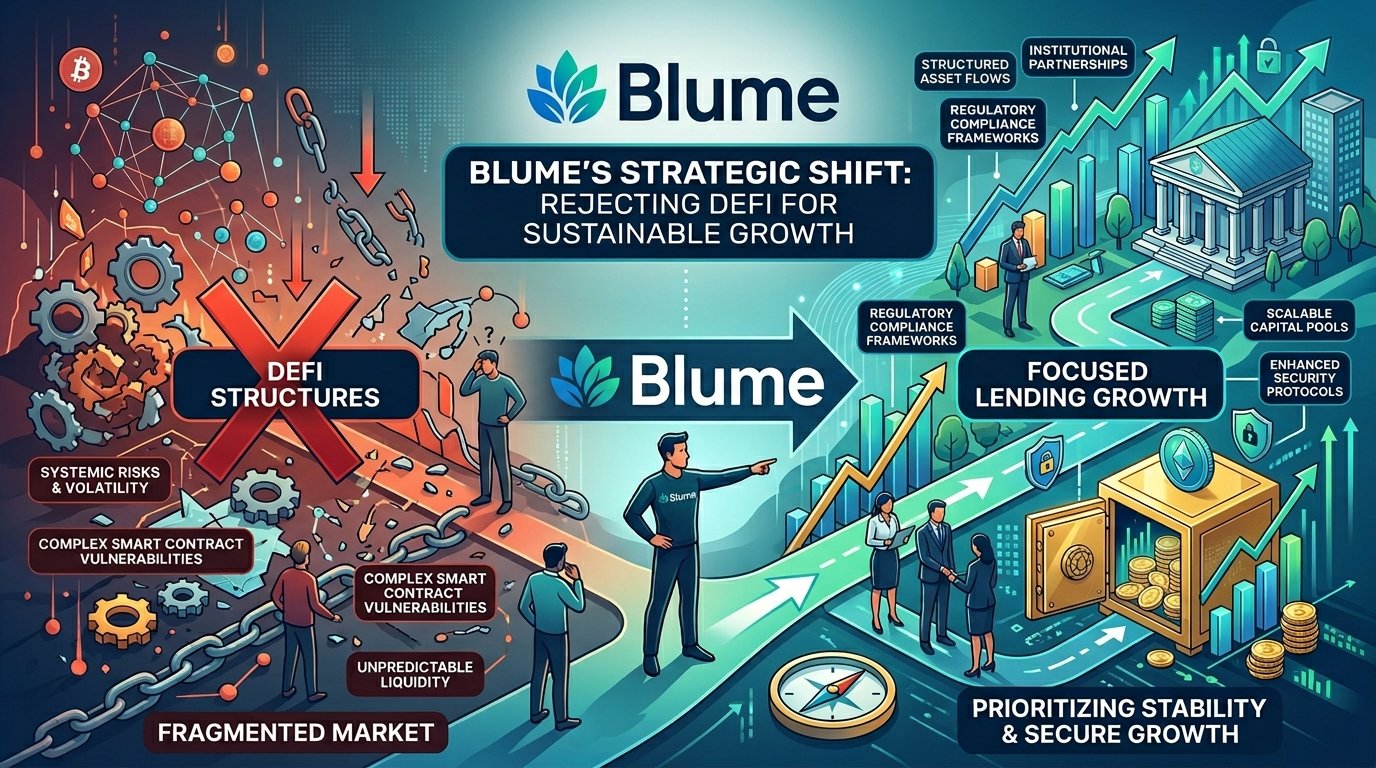
The crypto lending industry has experienced rapid growth over the past few years, driven by innovation, decentralized finance platforms, and increasing institutional interest in digital assets. However, the collapse of several major crypto firms and heightened regulatory scrutiny have changed the way investors and executives view decentralized finance. Against this backdrop, Blume rejects DeFi structures for crypto lending, signaling a cautious and more compliance-focused direction for the future of digital asset borrowing and lending services.
The statement has attracted significant attention across the cryptocurrency market because decentralized finance, commonly known as DeFi, has long been promoted as the foundation of permissionless financial systems. Many crypto startups embraced DeFi protocols as a way to eliminate intermediaries, increase transparency, and offer higher yields. Yet, recent market instability, liquidity crises, and security breaches have exposed weaknesses in certain decentralized lending models.
As traditional financial institutions continue exploring blockchain technology, many executives are beginning to question whether purely decentralized structures are sustainable for large-scale crypto lending operations. Blume rejects DeFi structures for crypto lending not only because of volatility concerns but also due to issues surrounding governance, compliance, transparency, and investor protection. This approach reflects a growing trend toward hybrid or centralized systems designed to meet regulatory expectations while still leveraging blockchain efficiency.
The debate between decentralized and centralized finance is becoming one of the defining issues in the digital asset sector. Investors want innovation and high returns, but they also demand security and reliability. Regulators, meanwhile, are pushing for stronger oversight to prevent fraud, money laundering, and systemic risk. As a result, companies operating in the crypto lending market are being forced to rethink their strategies.
This article explores why Blume rejects DeFi structures for crypto lending, what this means for the future of digital finance, how the crypto lending landscape is evolving, and why institutional investors may increasingly favor regulated models over purely decentralized systems.
Understanding the Crypto Lending Market
Crypto lending has become one of the most important segments of the blockchain industry. It allows users to lend digital assets in exchange for interest payments or borrow funds using cryptocurrencies as collateral. During the peak of the crypto bull market, decentralized lending platforms attracted billions of dollars in liquidity from retail and institutional participants.
Many early DeFi protocols promised an alternative financial system that operated without banks or centralized intermediaries. Smart contracts automated lending agreements, collateral management, and liquidations. Users could access financial services globally with minimal restrictions. This vision fueled explosive growth across the decentralized finance ecosystem.
However, the industry also faced severe setbacks. Market crashes exposed weaknesses in overleveraged platforms, poorly designed token incentives, and governance vulnerabilities. Several crypto lending firms collapsed after liquidity dried up, leaving investors with massive losses. These failures damaged confidence in decentralized financial models.
As a result, executives and investors began reassessing whether DeFi structures are suitable for long-term crypto lending stability. When Blume rejects DeFi structures for crypto lending, the decision reflects broader concerns about sustainability and operational risk within decentralized ecosystems.
Why Blume Rejects DeFi Structures for Crypto Lending

One of the primary reasons Blume rejects DeFi structures for crypto lending is the issue of risk management. Decentralized platforms often rely heavily on automated smart contracts without centralized oversight. While automation improves efficiency, it can also create vulnerabilities if protocols contain coding flaws or governance weaknesses.
The crypto industry has witnessed multiple hacks and exploits involving decentralized finance protocols. Billions of dollars have been lost due to smart contract failures, bridge attacks, and liquidity manipulation schemes. For institutional lenders, these risks remain difficult to justify.
Another factor involves regulatory uncertainty. Governments around the world are increasing oversight of digital assets and crypto lending services. Regulators want platforms to comply with anti-money laundering laws, know-your-customer requirements, and consumer protection standards. Many DeFi protocols operate in ways that make compliance difficult because they lack centralized operators.
Blume rejects DeFi structures for crypto lending partly because institutions increasingly prefer models that can integrate regulatory frameworks more effectively. Compliance has become essential for attracting mainstream financial participation.
Liquidity management also plays a critical role. During periods of extreme market volatility, decentralized lending platforms can experience rapid liquidations and liquidity shortages. This instability creates systemic risks for borrowers and lenders alike. Centralized risk controls may provide more predictable outcomes during market stress.
Additionally, governance challenges remain a major concern. DeFi protocols often rely on token-based governance systems where voting power depends on token ownership. Critics argue this structure can concentrate influence among large holders rather than ensuring fair decision-making.
By rejecting decentralized lending structures, Blume appears to favor a more controlled environment where accountability, transparency, and operational oversight are prioritized.
The Growing Divide Between DeFi and Institutional Finance
The decision that Blume rejects DeFi structures for crypto lending highlights a growing divide between decentralized finance advocates and institutional investors. While DeFi supporters believe financial systems should remain open and permissionless, institutions prioritize regulatory clarity and operational safeguards.
Institutional investors are increasingly entering the digital asset market, but they require infrastructure similar to traditional finance. Pension funds, hedge funds, and asset managers typically cannot allocate capital into systems lacking compliance standards or reliable legal protections.
This divergence has created two parallel trends within the crypto ecosystem. On one side, decentralized finance continues innovating through permissionless protocols and community-driven governance. On the other side, regulated crypto finance is expanding through licensed exchanges, custodians, and lending firms.
Blume rejects DeFi structures for crypto lending because institutional adoption often depends on trust, accountability, and regulatory alignment. Large investors are unlikely to deploy significant capital into ecosystems perceived as unstable or legally uncertain.
The result may be the emergence of hybrid models combining blockchain technology with centralized oversight. These systems could offer transparency and efficiency while maintaining compliance controls demanded by regulators and institutions.
Regulatory Pressure Reshaping Crypto Lending
Global regulators are playing an increasingly important role in shaping the future of crypto lending. Authorities in the United States, Europe, Asia, and other regions are introducing stricter rules for digital asset companies.
The collapse of major crypto firms intensified calls for stronger regulation. Policymakers argued that insufficient oversight exposed consumers to unnecessary risks. Since then, regulators have focused on stablecoins, lending platforms, and decentralized finance protocols.
When Blume rejects DeFi structures for crypto lending, it aligns with a broader industry shift toward compliance-first strategies. Companies recognize that long-term survival may depend on securing regulatory approval and building transparent operational frameworks.
Regulators are particularly concerned about the anonymous nature of some decentralized protocols. Anti-money laundering compliance becomes difficult when platforms lack centralized identity verification processes. Authorities also worry about systemic risks created by interconnected DeFi ecosystems.
In response, many crypto companies are redesigning their business models to fit within existing financial regulations. This includes implementing stricter customer verification procedures, improving disclosure standards, and increasing reserve transparency.
The future of crypto lending may ultimately depend on whether decentralized systems can adapt to evolving legal expectations without sacrificing their core principles.
Security Risks in Decentralized Lending Platforms
Security concerns remain one of the biggest obstacles facing decentralized finance adoption. Smart contracts are designed to automate financial transactions without intermediaries, but coding vulnerabilities can expose platforms to devastating attacks.
Over the past several years, hackers have exploited weaknesses in DeFi protocols through flash loan attacks, oracle manipulation, and bridge vulnerabilities. These incidents have resulted in billions of dollars in losses across the cryptocurrency industry.
Blume rejects DeFi structures for crypto lending largely because institutional investors require higher security standards. Traditional finance institutions typically operate within heavily regulated environments featuring insurance protections, legal accountability, and centralized oversight.
In contrast, decentralized protocols often place responsibility entirely on users. If a smart contract fails or funds are stolen, recovery options may be limited. This creates significant uncertainty for large-scale lenders.
Another issue involves protocol composability. Many DeFi applications interact with multiple protocols simultaneously, meaning vulnerabilities in one platform can cascade across the broader ecosystem. This interconnected structure amplifies systemic risk during market disruptions.
As security concerns continue influencing investor sentiment, crypto lending firms may increasingly prioritize controlled environments with stronger auditing standards and centralized safeguards.
How Traditional Finance Is Influencing Crypto Markets
Traditional finance institutions are becoming more involved in digital assets, and their influence is reshaping industry standards. Banks, asset managers, and fintech companies are exploring blockchain technology while demanding higher compliance and governance standards.
This institutionalization of crypto markets is one reason Blume rejects DeFi structures for crypto lending. Traditional financial firms operate within strict regulatory frameworks and cannot easily integrate with anonymous or permissionless systems.
Institutional investors also value predictable risk management practices. They expect robust custody solutions, audited reserves, transparent reporting, and legal accountability. Decentralized systems often struggle to provide these guarantees consistently.
As a result, many crypto companies are moving toward regulated financial products that resemble traditional banking structures. Blockchain technology is still being used to improve settlement efficiency, transparency, and accessibility, but the emphasis is shifting toward controlled implementation.
This trend does not necessarily mean decentralized finance will disappear. Instead, it suggests the market may split into separate segments serving different audiences. Retail traders and crypto-native users may continue using DeFi platforms, while institutions gravitate toward regulated alternatives.
The Future of DeFi After Blume’s Rejection
Although Blume rejects DeFi structures for crypto lending, decentralized finance remains a major force within the blockchain industry. Developers continue building innovative protocols focused on decentralized exchanges, lending markets, derivatives, and tokenized assets.
However, the industry is evolving rapidly. The speculative growth phase that characterized early DeFi expansion is gradually giving way to a more mature environment emphasizing sustainability and risk management.
Future DeFi platforms may incorporate stronger compliance mechanisms, insurance systems, and governance reforms. Some projects are already experimenting with permissioned decentralized finance models designed specifically for institutional participation.
The rejection of purely decentralized structures could encourage innovation aimed at solving the weaknesses exposed during previous market cycles. Improved smart contract audits, decentralized identity solutions, and more resilient liquidity systems may help restore investor confidence.
At the same time, competition from regulated crypto finance companies will likely intensify. Firms capable of balancing innovation with compliance may gain a significant advantage in attracting institutional capital.
Blume rejects DeFi structures for crypto lending today, but the broader decentralized finance movement may still adapt and evolve in response to market demands.
Investor Sentiment and Market Implications
Investor sentiment toward crypto lending has changed significantly since the market downturns of previous years. Retail investors who once chased extremely high yields are becoming more cautious about counterparty risk and platform stability.
Institutional investors are also conducting deeper due diligence before entering digital asset markets. Transparency, governance quality, and regulatory compliance have become major decision-making factors.
The announcement that Blume rejects DeFi structures for crypto lending could influence broader market perceptions about decentralized finance risk. Other firms may adopt similar positions as they attempt to appeal to regulators and institutional clients.
This shift could accelerate the development of regulated digital asset lending platforms operating under formal legal frameworks. It may also encourage greater collaboration between crypto companies and traditional financial institutions.
For decentralized finance advocates, however, the move raises concerns about centralization undermining blockchain’s original purpose. Critics argue that excessive regulation could limit innovation and reduce financial accessibility.
The future market landscape will likely involve ongoing tension between decentralization and institutional control. Both models may coexist, serving different segments of the financial ecosystem.
Can Hybrid Crypto Lending Models Succeed?
Hybrid crypto lending models are increasingly viewed as a potential middle ground between decentralized innovation and institutional compliance. These systems combine blockchain-based infrastructure with centralized oversight and regulatory safeguards.
Blume rejects DeFi structures for crypto lending, but this does not necessarily mean blockchain technology itself is being dismissed. Instead, the focus appears to be on creating safer and more accountable operational frameworks.
Hybrid models could offer several advantages. Blockchain technology can improve transaction transparency and settlement efficiency, while centralized governance structures can provide compliance controls and customer protections.
Some firms are already experimenting with tokenized real-world assets, permissioned lending pools, and regulated decentralized applications. These systems aim to preserve blockchain benefits while reducing legal and operational risks.
The success of hybrid models will depend on whether they can balance innovation with trust. Users attracted to decentralized finance may resist increased centralization, while regulators may continue demanding stricter oversight.
Nevertheless, hybrid systems may ultimately become the dominant structure for institutional crypto lending in the coming years.
Conclusion
The announcement that Blume rejects DeFi structures for crypto lending reflects a significant shift within the digital asset industry. After years of rapid expansion driven by decentralized finance innovation, the market is entering a more cautious and compliance-focused era.
Security vulnerabilities, regulatory uncertainty, governance concerns, and liquidity risks have forced companies and investors to reconsider the sustainability of purely decentralized lending systems. Institutional participants increasingly demand transparency, accountability, and regulatory alignment before committing capital to crypto markets.
While decentralized finance remains an important technological movement, the future of crypto lending may involve a blend of blockchain innovation and centralized oversight. Hybrid financial models could emerge as the preferred solution for balancing efficiency with investor protection.
The debate between decentralization and regulation will continue shaping the next phase of cryptocurrency adoption. As firms like Blume reject DeFi structures for crypto lending, the industry faces a defining moment that could determine how digital finance evolves over the next decade.
Leave a Reply