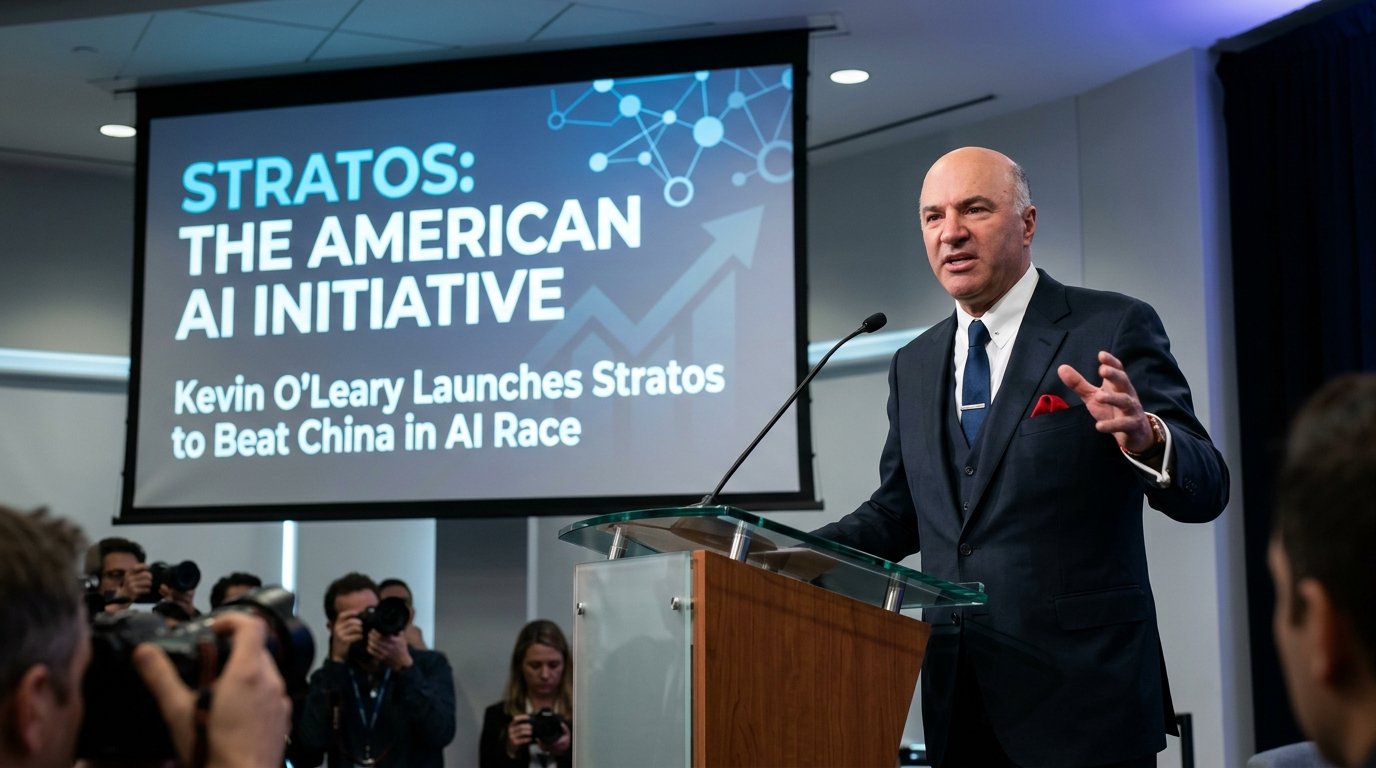
The global artificial intelligence race has entered a new phase, and billionaire investor Kevin O’Leary wants the United States to move faster. His latest project, called Stratos, aims to build one of the largest AI infrastructure campuses in America. The ambitious development reflects growing concerns that China continues to expand its AI and energy capabilities at a much faster pace than the US. According to recent reports, the project received approval in Utah despite strong public debate about energy usage, water consumption, and environmental impact.
The announcement has sparked massive interest across the technology and investment sectors. Many analysts now see Kevin O’Leary launches Stratos to beat China as more than just a headline. Instead, they view it as a signal that the battle for AI leadership has become a matter of economic strength and national security. As artificial intelligence systems require enormous computing power, countries that control advanced data infrastructure may dominate the next generation of technology innovation.
At the same time, the project highlights how rapidly the AI economy is evolving. Major tech firms continue to pour billions into hyperscale data centers, cloud computing, semiconductor production, and energy infrastructure. Therefore, O’Leary’s move aligns with a much broader effort to secure America’s position in the global AI industry. The proposed campus could become a central hub for future AI development while also creating thousands of jobs and attracting new investment into Utah.
What Is the Stratos Project?
The Stratos AI campus is a massive infrastructure project planned for Box Elder County in Utah. Reports indicate that the development will span nearly 40,000 acres and eventually generate up to 9 gigawatts of power capacity. That figure is enormous because it exceeds the electricity usage of many cities and even rivals the power needs of some countries.
The project will focus on supporting hyperscale AI data centers, which are critical for training advanced artificial intelligence models. These facilities process huge volumes of data and require vast amounts of computing resources. Consequently, AI companies now compete aggressively for access to reliable power and advanced infrastructure.
O’Leary has repeatedly argued that the United States cannot afford to fall behind China in AI expansion. He believes America must accelerate the development of computing infrastructure if it wants to remain competitive in the coming decades. As a result, Stratos represents both a commercial investment and a strategic initiative.
The campus reportedly plans to connect directly to the Ruby Pipeline for natural gas energy instead of relying entirely on the state grid. This approach aims to ensure a stable energy supply for AI operations. Moreover, developers claim the site will use advanced cooling systems and water recycling technologies to reduce environmental pressure.
Why Kevin O’Leary Says China Is the Main Competitor
The phrase Kevin O’Leary launches Stratos to beat China became widely discussed because O’Leary openly framed the project around global AI competition. According to reports, he warned that China has dramatically expanded its energy and AI infrastructure in recent years.
China continues to invest heavily in semiconductor manufacturing, AI research, robotics, quantum computing, and large-scale data centers. Furthermore, the Chinese government actively supports technology expansion through national policies and strategic funding. This centralized approach allows projects to move quickly from approval to construction.
O’Leary argues that the US often struggles with lengthy regulatory processes and infrastructure delays. In his view, these delays could weaken America’s ability to compete in the future AI economy. Therefore, he believes the country needs faster approvals and more aggressive investment in computing infrastructure.
The competition between the US and China now extends beyond traditional trade disputes. Instead, it includes AI supremacy, cloud computing dominance, and digital infrastructure leadership. Artificial intelligence increasingly affects cybersecurity, defense systems, financial services, healthcare, and manufacturing. Consequently, whichever nation controls stronger AI capabilities could gain major geopolitical advantages.
The Growing Importance of AI Infrastructure
Artificial intelligence systems rely on massive computational power. Every advanced AI model needs huge quantities of data, storage, networking capacity, and energy. Because of this, infrastructure has become one of the most important assets in the technology sector.
Companies developing AI tools require access to advanced GPUs, cloud servers, and hyperscale data centers. These systems consume enormous amounts of electricity while operating around the clock. Therefore, the demand for reliable energy continues to rise rapidly.
The Stratos project directly addresses this growing need. Instead of building a small collection of servers, O’Leary’s vision involves creating an integrated AI ecosystem capable of supporting future technologies on a national scale. The campus could potentially host multiple AI firms, cloud providers, defense contractors, and enterprise technology companies.
Additionally, the rise of generative AI has accelerated the race for computing power. Since businesses increasingly adopt AI-driven services, the pressure on existing infrastructure continues to intensify. As a result, companies that secure large-scale infrastructure early may gain a major competitive advantage.
How Stratos Could Impact the US Economy
Large AI infrastructure projects often create ripple effects throughout the economy. The Stratos campus could generate construction jobs, engineering roles, technology positions, and long-term business opportunities across several industries.
Utah may also benefit from increased investment, tax revenue, and technology development. Even though critics question the project’s incentives, supporters believe it could transform the region into a major AI and cloud computing hub.
Furthermore, AI infrastructure supports broader economic growth. Businesses increasingly depend on cloud services, machine learning systems, and automation tools to improve productivity. Therefore, advanced computing facilities may become essential for maintaining economic competitiveness.
Many investors now consider AI infrastructure one of the most valuable sectors in the market. Demand for data centers, semiconductors, and energy systems continues to surge as AI adoption expands globally. Consequently, projects like Stratos may attract significant private capital in the coming years.
Another important factor involves supply chain resilience. The US government and private sector both want to reduce dependence on foreign technology infrastructure. Domestic AI campuses could strengthen national technological independence while also improving cybersecurity protections.
Environmental Concerns Surrounding the Project
Despite the excitement surrounding Stratos, the project has faced serious criticism from local residents and environmental groups. Many people worry about water usage, land development, and energy consumption. Some residents reportedly protested during approval meetings because they believed the project moved forward too quickly.
Data centers require extensive cooling systems to prevent overheating. In regions already dealing with water shortages, this issue becomes especially sensitive. Critics fear that large AI facilities could place additional stress on local resources.
However, project supporters claim modern data centers have become far more efficient than older facilities. Developers say the Stratos campus plans to use closed-loop water recycling systems and advanced cooling technologies to minimize waste.
Energy consumption also remains a major concern. AI data centers use enormous amounts of electricity, and some experts warn that global power demand from AI could rise dramatically over the next decade. Therefore, balancing innovation with sustainability has become a key challenge for the entire tech industry.
Even so, supporters argue that America cannot slow infrastructure development while China continues expanding aggressively. They believe the solution lies in cleaner energy systems and smarter engineering rather than limiting AI growth entirely.
Why Data Centers Are Becoming Strategic Assets
Data centers were once viewed as simple storage facilities. Today, they function as the backbone of the digital economy. Every major online platform, streaming service, AI model, and cloud application depends on data center infrastructure.
As artificial intelligence becomes more powerful, the strategic importance of these facilities continues to grow. Countries that build advanced computing networks may gain economic, technological, and military advantages. Therefore, governments increasingly treat AI infrastructure as a national priority.
The Stratos project reflects this shift in thinking. Instead of viewing data centers as ordinary commercial real estate, O’Leary presents them as strategic assets that support national competitiveness.
Additionally, AI infrastructure now influences financial markets. Investors actively monitor data center construction, semiconductor production, and energy expansion because these sectors directly impact future AI growth. Consequently, projects like Stratos attract attention from both Wall Street and policymakers.
The AI Race Between the US and China
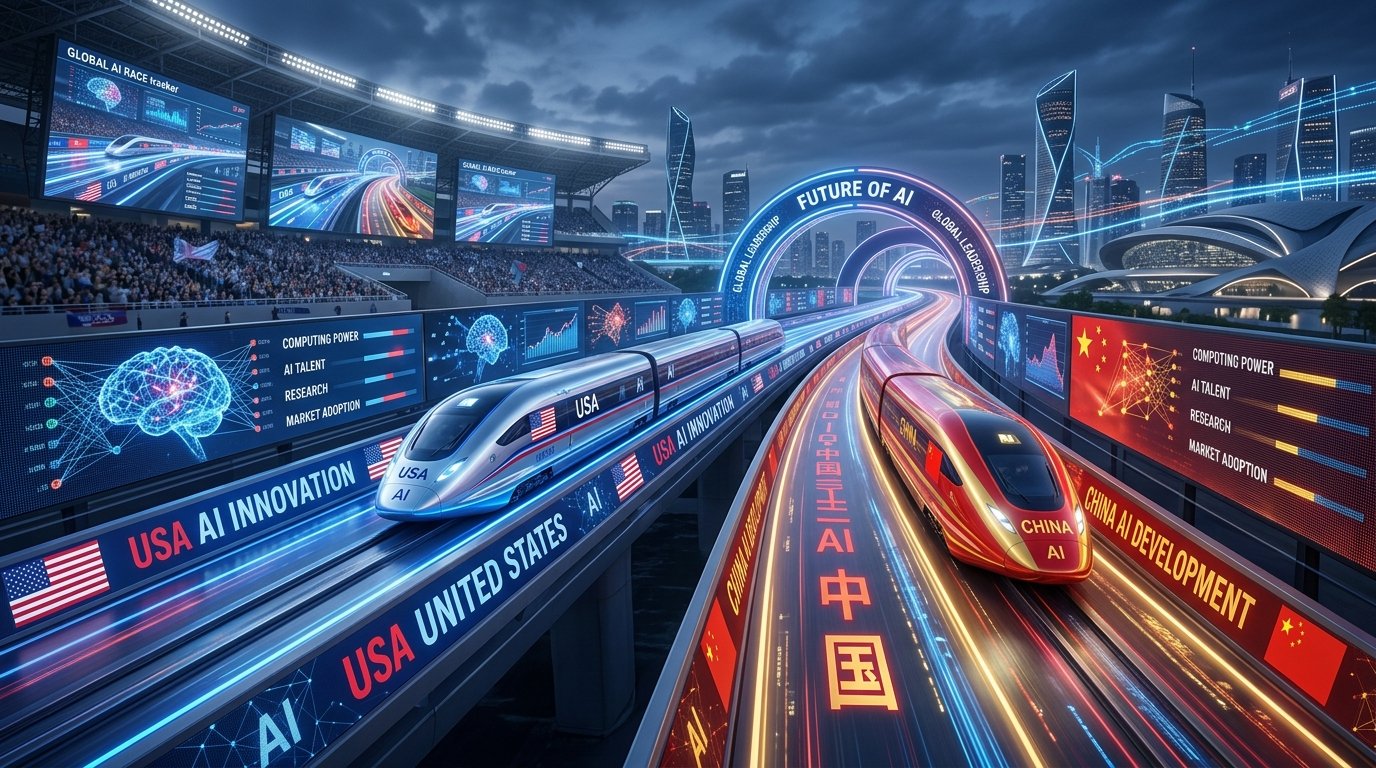
The AI rivalry between the United States and China continues to intensify. Both countries invest heavily in artificial intelligence research, semiconductor technology, cloud computing, and robotics.
China benefits from centralized planning and rapid infrastructure deployment. Meanwhile, the US relies more heavily on private investment and market-driven innovation. Each system offers different strengths, but speed increasingly matters in AI development.
O’Leary believes America must accelerate construction timelines and reduce unnecessary barriers. He argues that long approval processes could prevent the country from keeping pace with China’s expansion.
At the same time, US companies still lead many areas of AI software development and semiconductor design. American firms dominate much of the global cloud computing market, and Silicon Valley remains a center of AI innovation. Nevertheless, infrastructure limitations could become a bottleneck if demand continues growing rapidly.
The phrase Kevin O’Leary launches Stratos to beat China resonates because it captures growing anxiety about technological competition. AI no longer represents a niche industry. Instead, it shapes economic growth, defense strategy, and geopolitical influence.
The Role of Energy in Future AI Development
Energy has become one of the most important components of AI expansion. Advanced AI systems consume massive computational resources, and those systems require continuous electricity generation.
As AI adoption accelerates, energy demand from data centers could rise significantly. Therefore, future AI leaders may depend not only on software innovation but also on access to abundant power supplies.
The Stratos campus plans to address this challenge through direct energy infrastructure integration. Reports suggest the facility will use a dedicated natural gas pipeline connection to maintain stable operations.
However, the broader industry continues searching for cleaner solutions. Renewable energy, nuclear power, battery storage, and advanced cooling systems may all play larger roles in future AI infrastructure projects.
Many experts believe energy availability will become a defining factor in the global AI race. Countries capable of generating large-scale reliable power may gain an advantage in supporting advanced AI ecosystems.
Public Reaction to the Stratos Announcement
Public reaction to the Stratos project has been deeply divided. Some people see the development as a visionary investment that could strengthen America’s technological future. Others worry about environmental damage, excessive resource consumption, and rapid industrial expansion.
Supporters praise O’Leary for recognizing the urgency of the AI race. They argue that the US must build infrastructure quickly if it wants to remain globally competitive. Many investors also view the project as a sign that AI-related infrastructure spending will continue growing for years.
Critics, however, question whether local communities will benefit fairly from such massive developments. Concerns about land use, tax incentives, and environmental sustainability continue to fuel opposition.
Nevertheless, the approval of the project demonstrates how seriously policymakers now view AI infrastructure. Governments increasingly understand that computing capacity may shape future economic leadership.
What the Stratos Project Means for the Future of AI
The Stratos development could become a blueprint for future AI campuses across America. If successful, similar projects may emerge in other states as companies compete for computing power and energy access.
The AI economy still remains in its early stages. Yet demand for cloud infrastructure, machine learning systems, and AI computing continues to rise rapidly. Consequently, large-scale infrastructure projects may become more common over the next decade.
The phrase Kevin O’Leary launches Stratos to beat China symbolizes a broader transformation taking place in the technology world. AI competition now extends far beyond software development. It includes energy production, data center construction, semiconductor manufacturing, and national policy.
Companies that secure strong infrastructure positions today could dominate future AI markets. Therefore, investors, governments, and technology firms all continue monitoring projects like Stratos very closely.
Conclusion
Kevin O’Leary’s Stratos project represents one of the boldest AI infrastructure proposals in the United States. The massive Utah campus aims to provide the computing power and energy resources needed to support future artificial intelligence growth. At the same time, the project reflects increasing concern about China’s rapid expansion in AI and technology infrastructure.
While environmental debates and community concerns continue, supporters argue that America must move faster to remain competitive in the global AI race. The project highlights how data centers, energy systems, and AI infrastructure have become critical strategic assets.
As the demand for artificial intelligence continues rising, large-scale developments like Stratos may shape the future of technology, business, and geopolitics. Whether the project succeeds or faces major obstacles, one thing remains clear: the global AI competition has entered a new era.
Leave a Reply