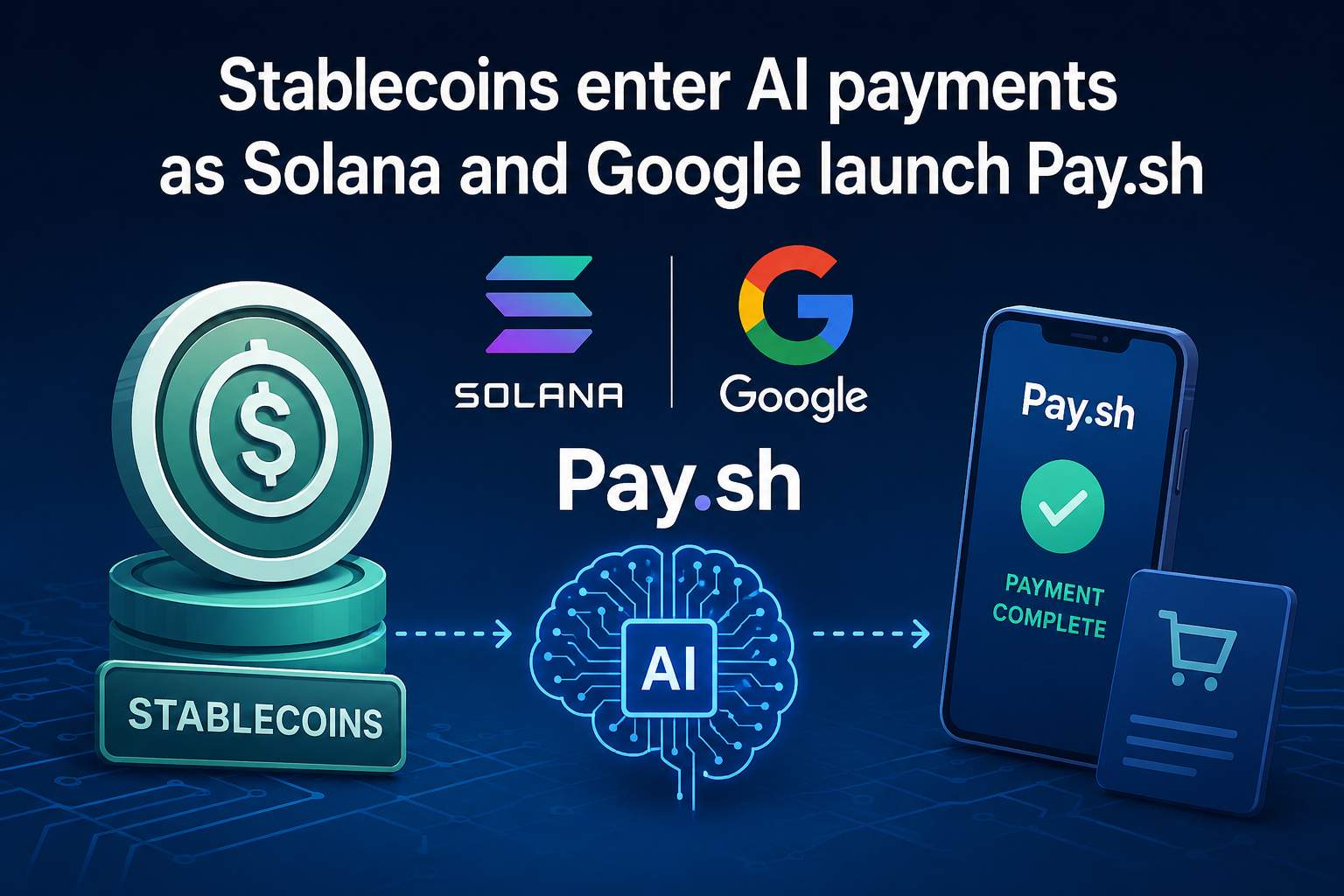
The convergence of blockchain technology and artificial intelligence is ushering in a new era of digital finance, where speed, automation, and trustless systems are becoming the standard rather than the exception. In this rapidly evolving landscape, stablecoins in AI payments are emerging as a transformative force, enabling seamless, real-time transactions across decentralized and centralized ecosystems alike. The recent launch of Pay.sh, a collaborative initiative involving Solana and Google, signals a pivotal shift in how payments are processed, managed, and optimized in the age of intelligent automation.
As businesses and developers increasingly explore AI-powered financial systems, the demand for reliable, low-volatility digital currencies has grown significantly. Stablecoins, designed to maintain a stable value by being pegged to fiat currencies or other assets, are uniquely positioned to meet this demand. By integrating stablecoins into AI-driven payment frameworks, platforms like Pay.sh aim to eliminate inefficiencies, reduce transaction costs, and unlock new possibilities for machine-to-machine commerce.
This article explores the implications of stablecoins entering AI payments, the role of Solana and Google in launching Pay.sh, and how this innovation could redefine the future of global finance.
The Rise of Stablecoins in Digital Payments
Stablecoins have evolved from niche crypto assets into essential components of the broader financial ecosystem. Their ability to combine the benefits of blockchain—such as transparency and decentralization—with price stability makes them ideal for everyday transactions.
Unlike volatile cryptocurrencies, stablecoins for payments offer predictability, which is crucial for both consumers and businesses. This stability enables their use in a wide range of applications, from cross-border remittances to e-commerce and now, increasingly, AI-driven payment systems.
The integration of stablecoins into digital payments has been accelerated by the need for faster settlement times and lower transaction fees. Traditional financial systems often involve intermediaries that slow down transactions and increase costs. Stablecoins, on the other hand, allow for near-instant transfers with minimal fees, making them highly attractive for modern payment solutions.
Understanding AI Payments and Their Growing Importance
AI payments refer to the use of artificial intelligence to automate, optimize, and enhance financial transactions. These systems can analyze data in real time, detect fraud, personalize payment experiences, and even execute transactions autonomously.
The concept of AI-driven payment systems is gaining traction as businesses seek to improve efficiency and customer experience. For instance, AI can enable smart billing systems that automatically adjust pricing based on usage or demand. It can also facilitate autonomous transactions, where machines pay for services without human intervention.
However, for AI payments to function effectively, they require a reliable medium of exchange. This is where stablecoins come into play. Their stability and programmability make them ideal for integration with AI systems, enabling seamless and secure transactions.
Solana and Google’s Pay.sh: A Game-Changing Collaboration
The launch of Pay.sh marks a significant milestone in the evolution of digital payments. By combining Solana’s high-performance blockchain with Google’s advanced AI capabilities, Pay.sh aims to create a robust platform for stablecoin-based AI payments.
Solana is known for its scalability and low transaction costs, making it an ideal blockchain for handling high volumes of transactions. Its ability to process thousands of transactions per second ensures that Pay.sh can support real-time payment processing without bottlenecks.
Google, on the other hand, brings its expertise in artificial intelligence and cloud computing to the table. By leveraging AI algorithms and machine learning models, Pay.sh can optimize payment flows, detect anomalies, and provide intelligent insights to users.
This collaboration represents a fusion of two powerful technologies—blockchain and AI—creating a platform that is greater than the sum of its parts.
How Pay.sh Works: Bridging Stablecoins and AI
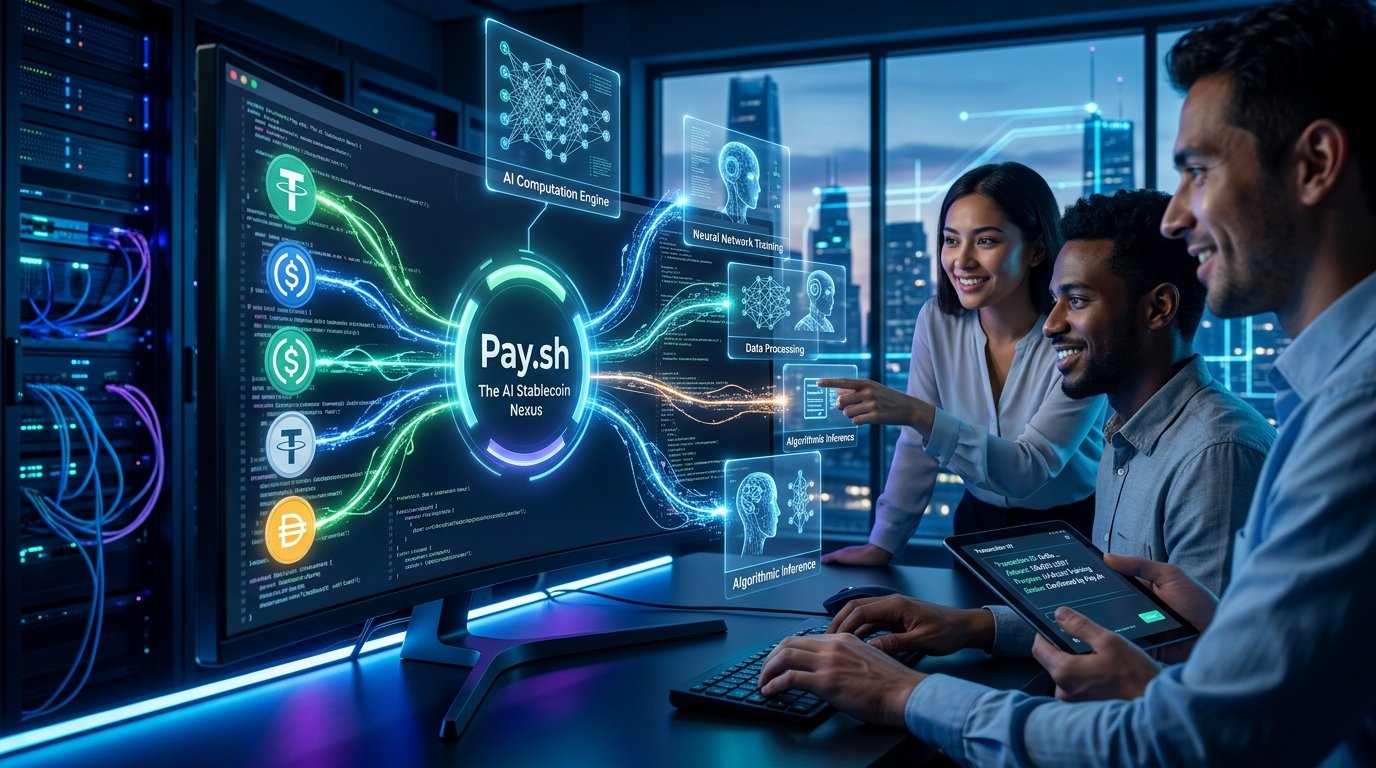
Pay.sh operates as a unified platform that integrates stablecoins into AI-driven payment workflows. At its core, the platform enables users and machines to send and receive payments using stablecoins, while AI algorithms handle the complexities of transaction management.
One of the key features of Pay.sh is its ability to facilitate machine-to-machine payments. For example, an autonomous vehicle could pay for charging services using stablecoins, with the transaction being executed automatically by an AI system.
The platform also supports smart contracts, which are self-executing agreements coded on the blockchain. These contracts can automate payment processes, ensuring that funds are released only when specific conditions are met.
By combining stablecoins with AI, Pay.sh eliminates the need for manual intervention, reduces errors, and enhances the overall efficiency of payment systems.
Benefits of Stablecoins in AI Payments
The integration of stablecoins into AI payments offers numerous advantages that could reshape the financial landscape.
One of the most significant benefits is transaction speed. Stablecoin transactions on high-performance blockchains like Solana are processed almost instantly, enabling real-time payments. This is particularly important for AI systems that require immediate execution of transactions.
Another key advantage is cost efficiency. Traditional payment systems often involve high fees due to intermediaries. Stablecoins eliminate these intermediaries, resulting in lower transaction costs.
Security is also a major benefit. Blockchain technology ensures that transactions are transparent and tamper-proof, while AI enhances security by detecting fraudulent activities in real time.
Additionally, stablecoins enable global accessibility, allowing users to participate in digital payments without relying on traditional banking infrastructure.
The Role of Blockchain in Enabling AI Payments
Blockchain technology serves as the foundation for stablecoin-based AI payments. Its decentralized nature ensures that transactions are secure, transparent, and resistant to censorship.
One of the key features of blockchain is its ability to support programmable money. Stablecoins can be programmed to execute specific actions under certain conditions, making them ideal for integration with AI systems.
Moreover, blockchain provides a reliable ledger for recording transactions, which is essential for auditing and compliance. This transparency builds trust among users and ensures the integrity of the payment system.
As AI continues to evolve, the role of blockchain in enabling intelligent financial systems will become increasingly important.
Challenges and Risks in Stablecoin AI Payments
Despite their potential, stablecoins in AI payments are not without challenges. One of the primary concerns is regulatory uncertainty. Governments around the world are still developing frameworks for regulating stablecoins, which could impact their adoption.
Another challenge is security risks. While blockchain is inherently secure, vulnerabilities can arise in smart contracts or AI algorithms. Ensuring robust security measures is essential to prevent potential breaches.
Scalability is also a concern, especially as the adoption of AI payments grows. Platforms like Pay.sh must be able to handle increasing transaction volumes without compromising performance.
Additionally, there are concerns about data privacy. AI systems rely on large amounts of data, raising questions about how this data is collected, stored, and used.
Future Implications of Pay.sh and Stablecoin Integration
The launch of Pay.sh could have far-reaching implications for the future of digital finance. As stablecoins become more integrated into AI payments, we can expect to see a shift towards fully automated financial ecosystems.
In such ecosystems, transactions could be executed seamlessly without human intervention, enabling new business models and revenue streams. For example, subscription services could be managed entirely by AI, with payments being processed automatically based on usage.
The integration of stablecoins and AI could also drive innovation in areas such as decentralized finance (DeFi), e-commerce, and supply chain management.
As more companies adopt these technologies, the demand for scalable and efficient payment solutions will continue to grow, further accelerating the adoption of platforms like Pay.sh.
The Competitive Landscape and Industry Adoption
The entry of stablecoins into AI payments is likely to intensify competition among technology companies and financial institutions. As Solana and Google take the lead with Pay.sh, other players are expected to follow suit, developing their own solutions for AI-powered payments.
This competition could drive innovation, leading to the development of more advanced and user-friendly payment systems. It could also encourage collaboration between different sectors, such as fintech, blockchain, and artificial intelligence.
Industry adoption will depend on factors such as regulatory clarity, technological advancements, and user trust. As these factors evolve, the adoption of stablecoins in AI payments is expected to increase significantly.
Conclusion
The integration of stablecoins into AI payments represents a significant step forward in the evolution of digital finance. With the launch of Pay.sh by Solana and Google, the industry is moving closer to a future where payments are faster, more efficient, and fully automated.
By combining the stability of stablecoins with the intelligence of AI, platforms like Pay.sh are redefining how transactions are conducted. While challenges remain, the potential benefits far outweigh the risks, making this a promising development for businesses and consumers alike.
As the adoption of stablecoins in AI payments continues to grow, it is clear that this innovation will play a crucial role in shaping the future of global finance.
FAQs
Q. What are stablecoins and why are they important in AI payments?
Stablecoins are digital currencies pegged to stable assets like fiat currencies. They provide price stability, making them ideal for AI-driven payment systems that require consistent value.
Q. How does Pay.sh integrate AI with stablecoin payments?
Pay.sh uses AI algorithms to automate and optimize payment processes while leveraging stablecoins for fast, secure, and low-cost transactions.
Q. Why is Solana used for Pay.sh?
Solana offers high scalability and low transaction fees, making it suitable for handling large volumes of real-time payments in AI systems.
Q. What are the risks of using stablecoins in AI payments?
Risks include regulatory uncertainty, security vulnerabilities, scalability challenges, and data privacy concerns.
Q. What is the future of stablecoins in digital payments?
Stablecoins are expected to play a major role in enabling automated, AI-driven financial ecosystems, transforming how transactions are conducted globally.
Leave a Reply