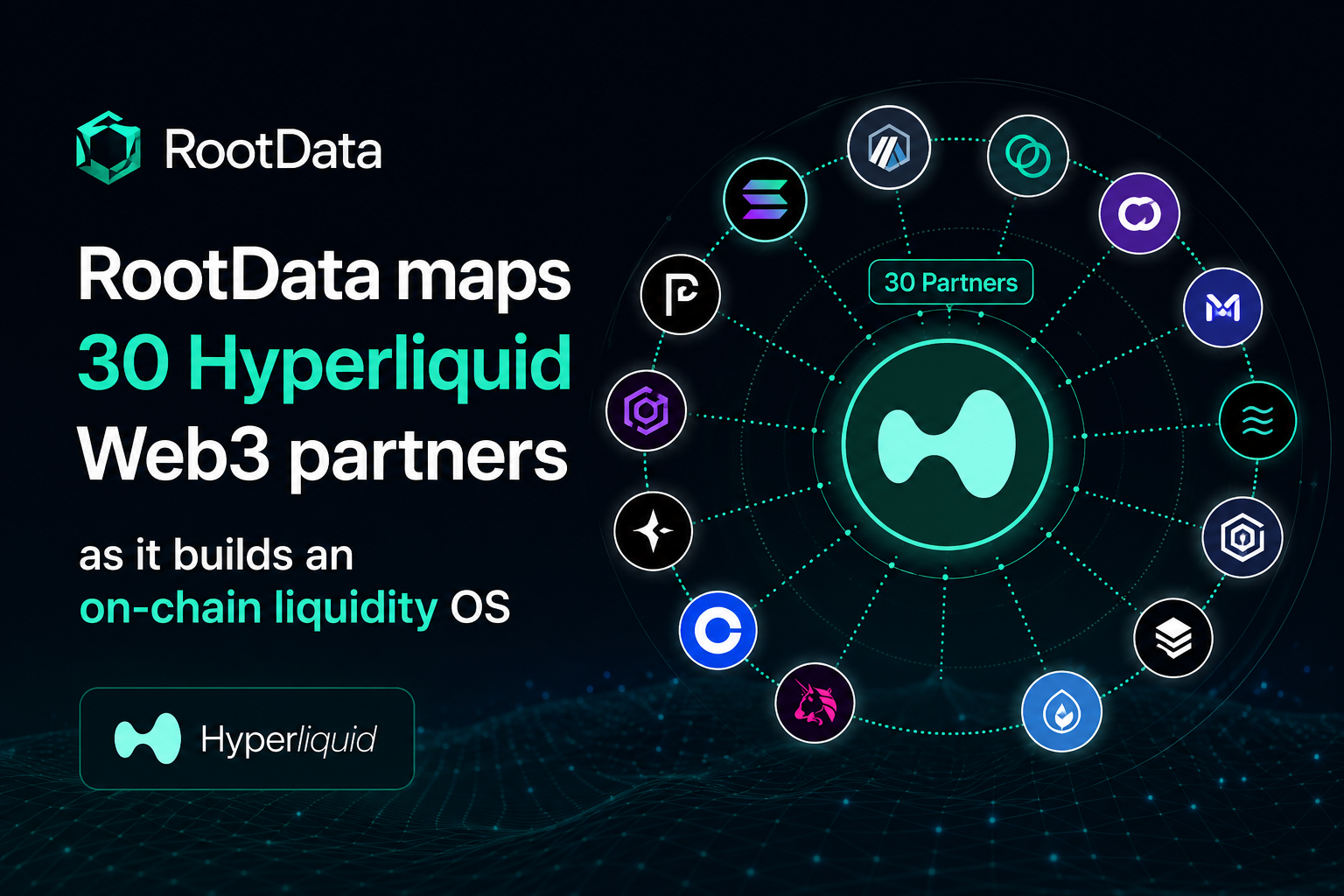
The decentralized finance space is evolving rapidly, and new systems are emerging to solve long-standing liquidity challenges. Among these innovations, the idea of an on-chain liquidity operating system (OS) is gaining serious momentum. In this environment, RootData’s move to map 30 Hyperliquid Web3 partners marks an important shift in how liquidity ecosystems operate.
As Web3 infrastructure continues to mature, the demand for transparency, interoperability, and efficient capital flow keeps increasing. Therefore, RootData has taken a strategic step by identifying key players within the Hyperliquid ecosystem. This effort not only highlights the growing importance of liquidity networks in DeFi, but also positions Hyperliquid as a core hub for next-generation financial systems.
Moreover, the collaboration between RootData and its mapped partners reflects a broader transition toward modular and composable finance. Instead of relying on fragmented liquidity pools, modern systems now aim to create unified frameworks that improve capital efficiency. As a result, RootData’s mapping initiative goes beyond simple data visualization. It actively contributes to building a scalable and intelligent on-chain liquidity OS.
Understanding RootData’s Role in Web3 Intelligence
RootData plays a critical role in delivering blockchain analytics and ecosystem intelligence. It provides clear insights into project relationships, funding patterns, and infrastructure layers. As a result, investors, developers, and researchers can navigate the Web3 landscape with greater confidence.
More importantly, RootData’s mapping of Hyperliquid Web3 partners creates a structured liquidity intelligence framework. This framework helps users understand how protocols interact and where liquidity flows across the ecosystem. Consequently, stakeholders can make more informed decisions and optimize their strategies.
In addition, data transparency in DeFi remains essential for long-term growth. Without reliable insights, users often face inefficient capital allocation and higher risks. However, RootData addresses this challenge by presenting organized and accessible data. Because of this, it strengthens trust and improves overall ecosystem efficiency.
What is Hyperliquid and Why It Matters
Hyperliquid represents a new class of high-performance decentralized trading infrastructure, designed to offer seamless, low-latency trading experiences without compromising on decentralization. Unlike traditional decentralized exchanges that rely heavily on fragmented liquidity pools, Hyperliquid aims to unify liquidity into a more cohesive and efficient system.
At its core, Hyperliquid is focused on building a scalable liquidity layer that supports advanced financial instruments and cross-chain interoperability. This makes it an ideal foundation for an on-chain liquidity OS, where various protocols can plug into a shared liquidity network.
The significance of Hyperliquid lies in its ability to address key pain points in DeFi, including liquidity fragmentation, high slippage, and inefficient capital utilization. By aggregating liquidity and optimizing its distribution, Hyperliquid enhances trading efficiency and improves overall market stability.
The Concept of an On-Chain Liquidity OS
The idea of an on-chain liquidity operating system represents a paradigm shift in how decentralized finance operates. Instead of isolated liquidity pools and siloed protocols, this model envisions a unified system where liquidity is dynamically allocated based on real-time demand and market conditions.
An on-chain liquidity OS functions as a coordinated infrastructure layer, enabling protocols to share liquidity resources while maintaining their individual functionalities. This approach not only improves capital efficiency but also reduces redundancy and enhances composability within the ecosystem.
RootData’s mapping of Hyperliquid Web3 partners plays a crucial role in realizing this vision. By identifying and categorizing key participants, RootData is laying the groundwork for a modular liquidity architecture that can scale across multiple chains and use cases.
Mapping 30 Hyperliquid Web3 Partners: A Strategic Move
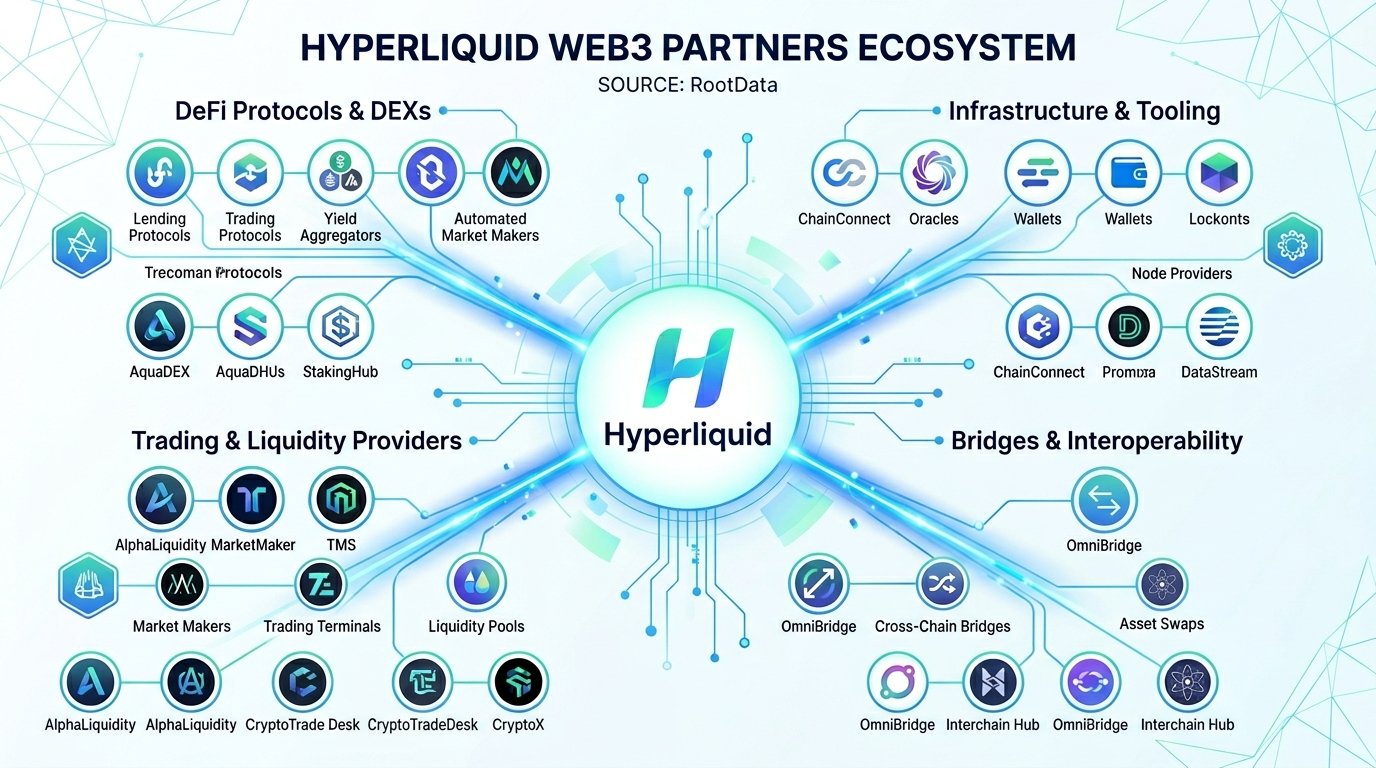 The mapping of 30 Hyperliquid Web3 partners is a significant milestone in the development of a connected liquidity ecosystem. These partners span various sectors, including decentralized exchanges, lending protocols, infrastructure providers, and analytics platforms.
This diverse network reflects the multi-layered nature of modern DeFi ecosystems, where different components work together to deliver seamless financial services. By mapping these relationships, RootData provides a clearer picture of how value flows within the Hyperliquid ecosystem.
Moreover, this initiative highlights the importance of ecosystem collaboration in Web3. No single protocol can achieve scalability and efficiency on its own. Instead, success depends on the ability to integrate with other protocols and leverage shared resources.
Enhancing Liquidity Efficiency Through Data
One of the primary benefits of RootData’s mapping effort is the enhancement of liquidity efficiency. By providing detailed insights into partner relationships and liquidity flows, RootData enables protocols to optimize their strategies and reduce inefficiencies.
Efficient liquidity management is essential for maintaining market stability and user confidence. When liquidity is distributed unevenly or locked in isolated pools, it can lead to increased volatility and reduced trading efficiency. RootData’s data-driven approach helps mitigate these risks by promoting more balanced liquidity distribution.
In addition, the integration of real-time analytics and on-chain data allows for more responsive liquidity management. Protocols can adjust their strategies based on current market conditions, ensuring optimal capital utilization at all times.
The Role of Interoperability in Liquidity OS
Interoperability is a key component of any successful on-chain liquidity OS. In a multi-chain world, the ability to move assets seamlessly across different networks is essential for maximizing liquidity efficiency.
Hyperliquid’s architecture supports cross-chain liquidity aggregation, enabling users to access a broader range of assets and trading opportunities. RootData’s mapping of Web3 partners further enhances this capability by identifying key integration points within the ecosystem.
The combination of interoperable infrastructure and comprehensive data mapping creates a powerful foundation for a truly unified liquidity system. This not only benefits individual users but also strengthens the overall resilience of the DeFi ecosystem.
Impact on DeFi Innovation and Growth
The development of an on-chain liquidity OS has far-reaching implications for DeFi innovation and growth. By streamlining liquidity management and reducing inefficiencies, this model enables the creation of more sophisticated financial products and services.
For developers, access to a unified liquidity layer simplifies the process of building new applications. Instead of worrying about sourcing liquidity, they can focus on creating innovative features and user experiences. This fosters a more vibrant and competitive ecosystem.
For users, the benefits include improved trading efficiency, lower costs, and enhanced accessibility. As liquidity becomes more fluid and interconnected, users can enjoy a seamless experience across different protocols and chains.
Challenges and Considerations
Despite its potential, the concept of an on-chain liquidity OS is not without challenges. Issues such as security, scalability, and governance must be carefully addressed to ensure the long-term success of this model.
Security remains a top priority, as the aggregation of liquidity increases the potential impact of vulnerabilities. Robust auditing and risk management practices are essential to protect user funds and maintain trust.
Scalability is another critical factor. As the ecosystem grows, the underlying infrastructure must be able to handle increased demand without compromising performance. Hyperliquid’s high-performance design is a step in the right direction, but continuous innovation will be necessary.
Governance also plays a కీల role in shaping the future of the liquidity OS. Decentralized decision-making mechanisms must be implemented to ensure that all stakeholders have a voice in the evolution of the system.
The Future of On-Chain Liquidity Systems
Looking ahead, the development of on-chain liquidity systems is expected to accelerate as more protocols recognize the benefits of shared liquidity infrastructure. RootData’s mapping initiative is likely to inspire similar efforts across other ecosystems, leading to greater standardization and interoperability.
As the concept of a liquidity OS matures, we can expect to see the emergence of intelligent liquidity routing, automated capital allocation, and AI-driven analytics. These advancements will further enhance the efficiency and scalability of decentralized finance.
The integration of institutional-grade infrastructure is another key trend to watch. As traditional financial institutions enter the Web3 space, the demand for robust, transparent, and efficient liquidity systems will continue to grow.
Conclusion
RootData’s mapping of 30 Hyperliquid Web3 partners marks a pivotal moment in the evolution of decentralized finance. By providing a comprehensive view of the ecosystem, RootData is laying the foundation for a next-generation on-chain liquidity OS that promises to transform how liquidity is managed and utilized.
The collaboration between RootData and Hyperliquid highlights the importance of data-driven insights, interoperability, and ecosystem collaboration in building scalable financial systems. As the DeFi landscape continues to evolve, initiatives like this will play a crucial role in shaping the future of decentralized finance.
Ultimately, the success of an on-chain liquidity OS will depend on the ability of protocols to work together, share resources, and embrace innovation. With its strategic mapping effort, RootData is taking a significant step toward realizing this vision.
Leave a Reply