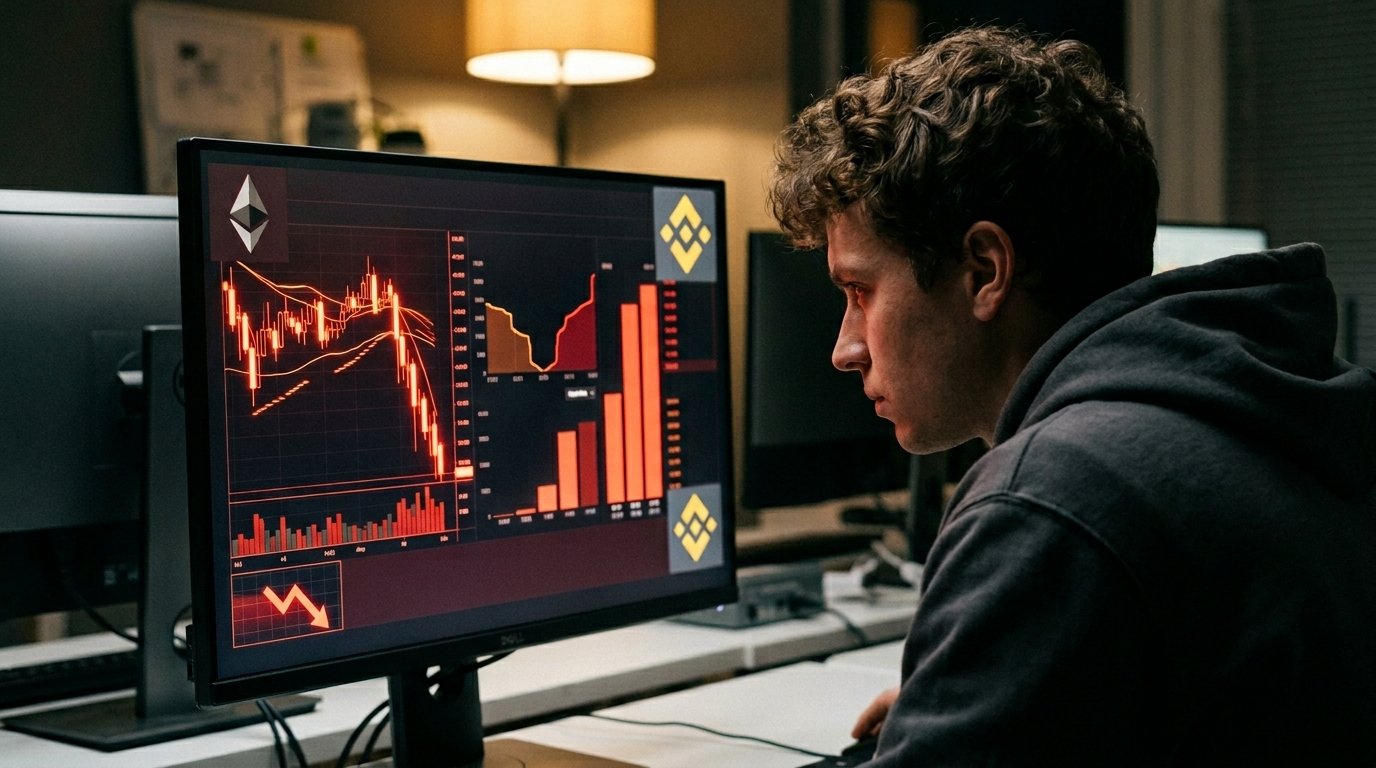
The cryptocurrency market is once again on edge after blockchain analytics platform Lookonchain identified massive Ethereum transfers linked to whale wallets moving funds toward Binance. The sudden movement of large amounts of ETH has fueled speculation about a potential market selloff, raising concerns among traders, institutional investors, and decentralized finance participants.
Whenever significant whale activity appears on-chain, market sentiment can shift rapidly. Large crypto holders, commonly known as whales, possess enough assets to influence short-term price action and overall investor psychology. In this latest development, Lookonchain flagged transactions involving substantial Ethereum deposits to Binance, triggering fears that whales may be preparing to liquidate positions amid uncertain market conditions.
The growing attention surrounding the reported whale transfers reflects how sensitive crypto markets remain to on-chain movements. Ethereum continues to serve as the backbone of decentralized finance, NFT ecosystems, staking infrastructure, and layer-2 blockchain development. Because of its importance, any indication of large-scale selling pressure can create ripple effects throughout the broader digital asset market.
This article explores the details behind the Ethereum whale activity, why Binance transfers matter, the potential implications for ETH prices, and how investors are interpreting the signals highlighted by Lookonchain.
Lookonchain Detects Massive Ethereum Transfers
Blockchain analytics firms have become essential tools for tracking crypto market behavior, and Lookonchain is widely followed for identifying large wallet movements and unusual on-chain activity. The latest alert involved Ethereum whales transferring massive amounts of ETH to Binance wallets, immediately sparking speculation across social media and trading communities.
Whale movements to exchanges are often interpreted as bearish signals because investors typically send crypto to trading platforms when preparing to sell assets. While not every exchange transfer leads to liquidation, the size of the reported Ethereum transactions attracted significant attention due to the potential market impact.
The transactions reportedly involved multiple wallets associated with high-net-worth holders or early Ethereum investors. Analysts monitoring blockchain flows observed a sharp increase in ETH deposits entering Binance-linked addresses over a relatively short period.
The concerns intensified because Ethereum has recently experienced heightened volatility amid changing macroeconomic conditions, regulatory uncertainty, and shifting investor appetite for risk assets. In this environment, large-scale whale transfers naturally trigger fears of a broader market correction.
The situation demonstrates how transparent blockchain networks allow investors to monitor capital movements in real time. Unlike traditional finance, public blockchain ledgers enable traders to analyze wallet behavior and anticipate potential market shifts before trades occur.
Why Binance Transfers Raise Selloff Concerns
The reason traders closely watch exchange inflows is simple: crypto assets generally move to exchanges for trading activity. When whales transfer large amounts of Ethereum to Binance, investors often assume selling pressure may follow.
Binance remains one of the world’s largest cryptocurrency exchanges by trading volume and liquidity. Because of its deep order books and global user base, it is a preferred venue for executing large trades. As a result, major ETH deposits into Binance wallets frequently attract market attention.
The Lookonchain flags Ethereum whale Binance selloff fears narrative gained momentum because exchange inflows historically correlate with short-term volatility. Traders interpret such movements as warnings that whales could reduce exposure, take profits, or reposition portfolios.
However, not every exchange transfer automatically signals bearish intentions. Some whales move funds for collateral management, derivatives trading, staking adjustments, or liquidity provision. Institutional investors may also rebalance holdings across platforms without immediate plans to sell.
Despite these possibilities, crypto markets tend to react emotionally to whale activity. Fear-driven reactions can amplify volatility even before any actual liquidation occurs.
Ethereum Whale Activity and Market Psychology
Whale movements hold enormous influence in crypto markets because large holders control significant percentages of circulating supply. Even rumors of potential whale selling can alter market sentiment.
Ethereum whales are particularly important because ETH plays a central role in decentralized finance, staking ecosystems, and smart contract infrastructure. Large ETH holders often include venture funds, crypto-native institutions, early adopters, and protocol treasuries.
The latest Lookonchain flags Ethereum whale Binance selloff fears report quickly spread across trading communities, fueling anxiety about possible downside momentum. Retail investors often interpret whale transfers as insider signals, assuming large holders possess superior market knowledge.
This psychological effect can create self-fulfilling market reactions. If enough traders fear a whale-driven selloff, they may begin selling preemptively, increasing downward pressure on prices.
Market sentiment is especially fragile during periods of uncertainty. Ethereum investors are currently balancing optimism surrounding ETF speculation, layer-2 adoption, and staking growth against concerns about macroeconomic tightening and regulatory developments.
In such an environment, visible whale activity can become a powerful narrative driver capable of influencing short-term price action.
Ethereum’s Current Market Position
Ethereum remains the second-largest cryptocurrency by market capitalization and continues to dominate the smart contract ecosystem. The network supports thousands of decentralized applications, NFT platforms, blockchain games, and DeFi protocols.
Despite periodic volatility, Ethereum has maintained strong long-term institutional interest due to its utility and ecosystem growth. The transition to proof-of-stake through the Merge significantly altered Ethereum’s tokenomics, reducing energy consumption while introducing staking-based yield mechanisms.
However, ETH prices remain highly sensitive to market liquidity conditions and investor sentiment. Large-scale whale transfers to exchanges often intensify concerns about short-term corrections, particularly after strong rallies.
The Lookonchain flags Ethereum whale Binance selloff fears narrative emerged during a period when traders were already closely monitoring Ethereum’s support and resistance levels. Analysts noted that increased exchange inflows could contribute to higher selling pressure if market momentum weakens.
At the same time, Ethereum continues benefiting from growing institutional adoption, expanding layer-2 ecosystems, and rising developer activity. These long-term fundamentals may help offset temporary market fears generated by whale behavior.
How On-Chain Analytics Shape Crypto Trading
The rise of blockchain analytics platforms has fundamentally changed how crypto markets operate. Services like Lookonchain provide real-time visibility into wallet movements, exchange flows, and smart contract activity.
On-chain data has become an essential component of modern crypto trading strategies. Investors monitor whale transactions, stablecoin flows, staking activity, and exchange balances to gauge market direction.
The latest Lookonchain flags Ethereum whale Binance selloff fears report highlights the growing influence of analytics-driven narratives in digital asset markets. Traders increasingly react not only to price charts but also to blockchain transaction patterns.
This transparency creates both opportunities and challenges. On one hand, public blockchain data allows investors to identify market trends earlier than in traditional finance. On the other hand, excessive focus on whale movements can contribute to overreaction and panic-driven trading.
Institutional investors are also incorporating on-chain analytics into portfolio management and risk assessment frameworks. As crypto markets mature, blockchain intelligence tools are becoming increasingly sophisticated and influential.
Could Ethereum Face Increased Volatility?
Large whale transfers often increase the probability of short-term volatility, especially when broader market sentiment is uncertain. If significant ETH selling occurs on Binance, price swings could intensify across spot and derivatives markets.
Ethereum’s liquidity is substantial, but sudden large sell orders can still affect market structure. Traders closely monitor order books, funding rates, and derivatives positioning for signs of growing bearish momentum.
The Lookonchain flags Ethereum whale Binance selloff fears discussion also raised concerns about cascading liquidations in leveraged trading markets. Crypto derivatives platforms are highly sensitive to rapid price movements, and heavy selling pressure can trigger liquidation events that accelerate volatility.
However, some analysts argue that whale transfers alone do not guarantee a major correction. Ethereum markets have become more mature and institutionally integrated over time, improving overall liquidity and resilience.
Long-term investors often view whale-driven dips as buying opportunities rather than reasons for panic. Much depends on broader macroeconomic conditions, Bitcoin market trends, and investor confidence in Ethereum’s long-term growth prospects.
Institutional Investors and Ethereum Market Stability
Institutional involvement in Ethereum markets has expanded significantly over the past several years. Hedge funds, asset managers, fintech firms, and crypto investment companies now hold substantial ETH positions.
This institutional presence can both stabilize and complicate market dynamics. Large investors often use sophisticated trading strategies that involve exchange transfers, derivatives hedging, and liquidity management.
The Lookonchain flags Ethereum whale Binance selloff fears narrative may therefore reflect more than simple panic selling. Some whale transfers could relate to structured financial activity rather than outright liquidation.
Institutions also tend to focus on long-term Ethereum fundamentals, including staking yields, network adoption, tokenization trends, and decentralized finance growth. As a result, temporary volatility may not significantly alter broader investment theses.
Nevertheless, institutional traders closely monitor market sentiment because psychological reactions can create short-term trading opportunities and risks.
The Broader Impact on the Crypto Market
Ethereum whale activity often affects the broader cryptocurrency ecosystem because ETH serves as a foundational asset for decentralized finance and altcoin liquidity.
If Ethereum experiences heavy selling pressure, altcoins frequently follow due to correlated market behavior. DeFi tokens, layer-2 assets, and NFT-related cryptocurrencies may experience increased volatility as traders reduce risk exposure.
The latest Lookonchain flags Ethereum whale Binance selloff fears development also renewed concerns about overall crypto market fragility. Investors remain cautious about inflation trends, interest rate expectations, and evolving regulatory pressures worldwide.
At the same time, crypto markets have repeatedly demonstrated resilience following whale-driven corrections. Long-term adoption trends, technological innovation, and institutional participation continue supporting the industry’s growth trajectory.
Whether the current whale activity results in sustained downside pressure or merely temporary volatility remains uncertain. Much will depend on actual exchange trading behavior and broader market sentiment in the coming days.
What Traders Are Watching Next
Market participants are now closely monitoring several indicators to determine whether the whale transfers will lead to meaningful selling activity.
Exchange reserve data remains a primary focus because rising ETH balances on Binance could indicate growing sell-side pressure. Traders are also watching derivatives markets for changes in funding rates and open interest.
The Lookonchain flags Ethereum whale Binance selloff fears narrative may evolve quickly depending on Ethereum’s price reaction and additional whale activity. If markets absorb the transfers without major downside movement, investor fears could fade rapidly.
Conversely, sustained selling pressure combined with negative macroeconomic news could intensify bearish sentiment across crypto markets.
Analysts are also paying attention to whether whales continue moving funds to exchanges or begin withdrawing assets back into private wallets and staking platforms. Such behavior may provide clearer clues regarding long-term market intentions.
Conclusion
The latest Lookonchain flags Ethereum whale Binance selloff fears report has once again highlighted the enormous influence whale activity exerts on crypto market sentiment. Large Ethereum transfers to Binance sparked immediate speculation about potential selling pressure, triggering anxiety among traders and investors already navigating volatile market conditions.
While exchange inflows do not always result in liquidation, whale movements remain closely watched because of their historical correlation with short-term volatility. Ethereum’s central role in decentralized finance and blockchain infrastructure makes such developments particularly important for the broader crypto ecosystem.
At the same time, the incident demonstrates how blockchain transparency continues reshaping financial markets. On-chain analytics platforms now provide investors with unprecedented visibility into capital movements, enabling faster reactions but also amplifying emotional trading behavior.
Ultimately, whether the reported whale transfers lead to a major Ethereum correction or simply temporary market noise will depend on broader investor sentiment, macroeconomic conditions, and actual trading activity in the days ahead.
Leave a Reply