
Blog

  • Ethereum Price Prediction: ETH Eyes 2026 Rally

    Ethereum Price Prediction: ETH Eyes 2026 Rally

    The cryptocurrency market continues to evolve rapidly, but one digital asset that remains at the center of investor attention is Ethereum. Over the past several months, Ethereum has demonstrated remarkable resilience despite periods of macroeconomic uncertainty, shifting regulatory narratives, and changing institutional sentiment. As ETH stabilizes near the $2,350 level, traders and long-term investors are increasingly discussing the possibility of a gradual upward trend extending into 2026.

    The latest Ethereum price prediction models suggest that ETH may be entering a prolonged accumulation phase before a larger breakout cycle unfolds. Unlike the explosive bull runs witnessed in previous crypto cycles, analysts now believe the market may experience a slower and more sustainable climb. This “grind higher” narrative is gaining traction because of improving network fundamentals, rising institutional participation, increasing adoption of decentralized finance, and the continued growth of Ethereum’s Layer-2 ecosystem.

    Ethereum remains the backbone of the broader blockchain economy. From decentralized applications and NFT marketplaces to tokenized assets and smart contracts, the Ethereum network powers a significant share of the crypto industry. While Bitcoin continues to dominate headlines as digital gold, Ethereum is increasingly viewed as the infrastructure layer for the future internet economy.

    As investors evaluate the future trajectory of ETH, several critical questions emerge. Can Ethereum maintain support above $2,300? Will institutional demand continue increasing? Could ETH revisit its previous all-time highs before 2026? And what role will broader macroeconomic trends play in shaping Ethereum’s long-term valuation?

    This detailed Ethereum price prediction article explores the current market outlook, technical indicators, on-chain trends, institutional interest, macroeconomic conditions, and future catalysts that could influence ETH prices over the next two years.

    Ethereum Holds Strong Near $2,350

    Ethereum’s ability to remain stable near the $2,350 zone is being interpreted by many analysts as a sign of underlying market strength. During previous bear cycles, ETH experienced aggressive volatility and deep retracements, but the current market structure appears more balanced and mature.

    Several factors contribute to this stability. First, long-term holders continue accumulating ETH rather than panic-selling during corrections. Wallet activity data shows that investors holding Ethereum for more than one year have steadily increased their positions. This behavior typically indicates confidence in future price appreciation.

    Second, institutional participation has expanded significantly compared to earlier crypto cycles. Hedge funds, asset managers, fintech firms, and even traditional banking institutions are now actively exploring Ethereum exposure. The emergence of spot crypto ETFs and regulated investment products has made Ethereum more accessible to mainstream investors.

    Another reason ETH is maintaining support lies in reduced selling pressure. Since Ethereum transitioned to proof-of-stake through the Merge upgrade, the network’s issuance rate has declined considerably. Lower token issuance combined with periodic token burning mechanisms has strengthened the asset’s scarcity narrative.

    This evolving supply dynamic is becoming a major pillar of many Ethereum price prediction models for 2026.

    Why Analysts Expect a Gradual Climb Into 2026

    Unlike earlier speculative cycles driven almost entirely by retail enthusiasm, the next Ethereum rally may be more institutional and fundamentally driven. Analysts increasingly believe ETH could rise steadily over time rather than experience sudden parabolic moves.

    One major factor supporting this thesis is the growing utility of the Ethereum blockchain. The network continues to dominate decentralized finance applications, tokenization projects, stablecoin settlements, and smart contract development. As blockchain adoption expands globally, Ethereum is expected to remain a central infrastructure provider.

    Another key element is the rise of Layer-2 scaling solutions. Networks such as Arbitrum, Optimism, and Base are improving Ethereum’s transaction efficiency while lowering costs. These developments enhance user experience and increase network adoption without compromising Ethereum’s security model.

    Investors are also paying close attention to macroeconomic conditions. If central banks begin easing interest rates over the coming years, risk assets like cryptocurrencies could benefit significantly. Historically, Ethereum has performed strongly during periods of increased market liquidity.

    Many analysts now believe ETH may gradually approach higher resistance zones throughout 2026 as capital flows back into digital assets.

    Institutional Demand Could Shape Ethereum’s Future

    Institutional involvement is becoming one of the most important themes in the Ethereum ecosystem. Major financial firms are increasingly exploring blockchain infrastructure, tokenized assets, and decentralized financial products built on Ethereum.

    Large institutions are attracted to Ethereum because it offers more than speculative value. The network functions as a programmable financial layer capable of supporting lending platforms, derivatives markets, decentralized exchanges, and asset tokenization systems.

    The growing interest in tokenized real-world assets is particularly significant. Banks and investment firms are experimenting with tokenized bonds, stocks, and payment systems using Ethereum-compatible infrastructure. This trend could dramatically increase network demand over time.

    Furthermore, staking continues to remove circulating ETH supply from the market. Investors who stake Ethereum earn passive rewards while helping secure the network. As more ETH becomes locked in staking contracts, available market supply decreases, potentially creating upward price pressure.

    These structural factors continue strengthening long-term Ethereum price prediction outlooks.

    Technical Analysis Signals a Potential Long-Term Breakout

    From a technical perspective, Ethereum’s price structure currently reflects consolidation rather than weakness. Analysts often interpret prolonged sideways trading after a recovery phase as a healthy market reset.

    ETH has repeatedly defended major support levels near $2,300, indicating strong buyer interest. Momentum indicators also suggest the market may be preparing for another expansion phase if broader crypto sentiment improves.

    The psychological resistance zone around $2,500 remains important. A decisive breakout above this level could trigger renewed bullish momentum and attract additional institutional inflows.

    Long-term chart patterns also indicate Ethereum may still be within a larger macro uptrend. Analysts monitoring moving averages, RSI trends, and volume profiles believe the market is establishing a base for future growth.

    Some aggressive Ethereum price prediction scenarios even suggest ETH could challenge previous all-time highs before the end of 2026 if adoption trends accelerate.

    Ethereum’s Deflationary Mechanics Support Higher Prices

    Ethereum Price Prediction ETH Eyes 2026 Rally

    One of the most important developments affecting Ethereum’s long-term value proposition is its evolving supply structure. Since implementing EIP-1559 and transitioning to proof-of-stake, Ethereum has become partially deflationary during periods of high network activity.

    Under the current system, a portion of transaction fees is permanently burned, reducing overall token supply. When network usage rises, burn rates increase accordingly. This mechanism has fundamentally changed how investors evaluate ETH.

    In earlier years, Ethereum faced criticism for unlimited supply issuance. Today, however, many investors view ETH as a potentially scarce digital asset with improving monetary characteristics.

    This transformation has strengthened comparisons between Ethereum and traditional store-of-value assets. While Ethereum’s primary function remains utility-driven, its deflationary features have enhanced investor confidence in long-term price appreciation.

    As decentralized applications continue growing, transaction activity may increase substantially, leading to more token burns and tighter supply conditions.

    Layer-2 Expansion Is Strengthening Ethereum’s Ecosystem

    Scalability has long been one of Ethereum’s biggest challenges. High transaction fees and network congestion previously limited mainstream adoption. However, Layer-2 solutions are now changing that narrative.

    Layer-2 networks process transactions more efficiently while relying on Ethereum’s security infrastructure. This significantly reduces fees and improves transaction speed.

    The rapid growth of ecosystems like Arbitrum, Optimism, zkSync, and Base demonstrates rising developer confidence in Ethereum scaling solutions. These networks are attracting decentralized finance protocols, gaming platforms, and Web3 applications at an accelerating pace.

    Importantly, Layer-2 adoption strengthens Ethereum rather than replacing it. Most Layer-2 systems ultimately settle transactions on the Ethereum mainnet, increasing ETH utility and network demand.

    This ecosystem expansion is a major reason many analysts remain optimistic about Ethereum price prediction targets into 2026.

    Macroeconomic Conditions Will Influence ETH Prices

    While Ethereum’s fundamentals remain strong, macroeconomic conditions continue playing a crucial role in short-term market direction. Interest rates, inflation trends, and global liquidity conditions significantly affect investor appetite for risk assets.

    During periods of aggressive monetary tightening, cryptocurrencies often face selling pressure as investors shift toward safer investments. Conversely, easing financial conditions typically support speculative markets.

    If inflation moderates and central banks begin lowering interest rates over the next two years, Ethereum could benefit from renewed capital inflows. Lower borrowing costs often encourage investment in growth-oriented and alternative assets.

    Geopolitical developments may also impact crypto markets. Economic instability, currency devaluation concerns, and banking system uncertainty have historically increased interest in decentralized financial systems.

    As global markets evolve, Ethereum’s role as both a technology platform and digital asset could become increasingly attractive to investors seeking diversification.

    Could Ethereum Reach New All-Time Highs by 2026?

    One of the most debated questions among investors is whether Ethereum can surpass its previous all-time high near $4,900 before 2026.

    Bullish analysts argue that improved institutional access, stronger tokenomics, expanding adoption, and growing blockchain utility create favorable conditions for long-term appreciation. If crypto markets enter another broad bull cycle, Ethereum could potentially revisit and exceed previous highs.

    Some optimistic Ethereum price prediction models estimate ETH could trade between $5,000 and $8,000 during a strong market expansion. These projections are based on increasing network usage, higher staking participation, and rising institutional demand.

    However, not all analysts agree on such aggressive targets. More conservative forecasts suggest Ethereum may experience gradual growth rather than explosive rallies. In this scenario, ETH could steadily climb toward higher valuation zones over multiple years.

    Ultimately, Ethereum’s future price trajectory will depend on adoption growth, macroeconomic conditions, technological development, and broader market sentiment.

    Risks That Could Affect Ethereum’s Growth

    Despite strong optimism surrounding Ethereum, investors should remain aware of potential risks. Cryptocurrency markets remain highly volatile, and Ethereum is not immune to sharp corrections.

    Regulatory uncertainty continues to be one of the biggest concerns. Governments worldwide are still developing frameworks for digital assets, decentralized finance, and crypto staking services. Unexpected regulatory restrictions could negatively impact investor sentiment.

    Competition also remains intense. Alternative smart contract platforms continue attempting to challenge Ethereum’s dominance by offering faster speeds and lower transaction costs.

    Security risks are another consideration. While Ethereum itself is highly secure, vulnerabilities in decentralized applications and smart contracts can still create market disruptions.

    Macroeconomic instability may also pressure crypto valuations if global financial conditions deteriorate unexpectedly.

    Investors evaluating Ethereum price prediction scenarios should carefully balance long-term optimism with awareness of these risks.

    Ethereum’s Role in the Future Digital Economy

    Ethereum’s significance extends far beyond price speculation. The network is increasingly viewed as a foundational layer for decentralized internet infrastructure.

    Developers worldwide continue building applications for decentralized finance, gaming, identity systems, supply chain tracking, tokenized assets, and artificial intelligence integrations using Ethereum-compatible frameworks.

    Stablecoins operating on Ethereum already process billions of dollars in transaction volume. This growing usage demonstrates how blockchain technology is gradually integrating into mainstream financial systems.

    As tokenization trends accelerate, Ethereum may become a critical settlement layer for global digital assets. Financial institutions exploring blockchain technology often prioritize Ethereum because of its security, developer ecosystem, and established infrastructure.

    This broader utility strengthens the long-term investment thesis for ETH and supports bullish Ethereum price prediction outlooks beyond short-term market cycles.

    Conclusion

    Ethereum continues holding near the crucial $2,350 level as investors anticipate a gradual but sustained climb into 2026. Unlike earlier speculative cycles driven largely by retail hype, the current market environment reflects stronger institutional participation, improving tokenomics, expanding blockchain utility, and growing ecosystem maturity.

    The combination of reduced supply issuance, staking growth, Layer-2 expansion, and increasing real-world adoption is creating a fundamentally stronger foundation for Ethereum’s future. While short-term volatility remains inevitable, many analysts believe ETH is positioning itself for long-term appreciation over the coming years.

    Macroeconomic trends, regulatory developments, and overall crypto market sentiment will continue influencing price action. However, Ethereum’s role as the leading smart contract platform gives it a unique advantage within the evolving digital economy.

    Whether ETH experiences a slow grind higher or a more aggressive breakout cycle, Ethereum remains one of the most closely watched and strategically important assets in the cryptocurrency market today.

  • Blume Rejects DeFi Structures for Crypto Lending Growth

    Blume Rejects DeFi Structures for Crypto Lending Growth

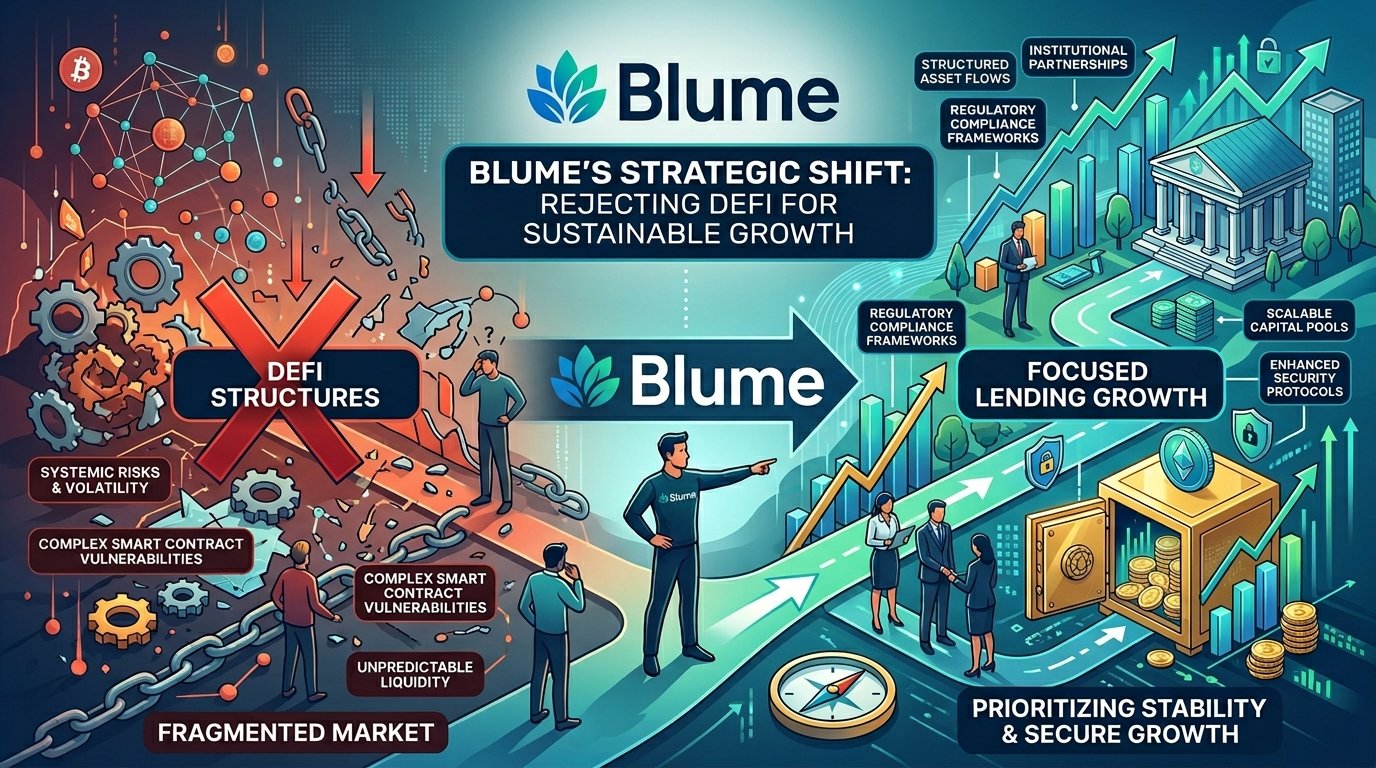
    The crypto lending industry has experienced rapid growth over the past few years, driven by innovation, decentralized finance platforms, and increasing institutional interest in digital assets. However, the collapse of several major crypto firms and heightened regulatory scrutiny have changed the way investors and executives view decentralized finance. Against this backdrop, Blume rejects DeFi structures for crypto lending, signaling a cautious and more compliance-focused direction for the future of digital asset borrowing and lending services.

    The statement has attracted significant attention across the cryptocurrency market because decentralized finance, commonly known as DeFi, has long been promoted as the foundation of permissionless financial systems. Many crypto startups embraced DeFi protocols as a way to eliminate intermediaries, increase transparency, and offer higher yields. Yet, recent market instability, liquidity crises, and security breaches have exposed weaknesses in certain decentralized lending models.

    As traditional financial institutions continue exploring blockchain technology, many executives are beginning to question whether purely decentralized structures are sustainable for large-scale crypto lending operations. Blume rejects DeFi structures for crypto lending not only because of volatility concerns but also due to issues surrounding governance, compliance, transparency, and investor protection. This approach reflects a growing trend toward hybrid or centralized systems designed to meet regulatory expectations while still leveraging blockchain efficiency.

    The debate between decentralized and centralized finance is becoming one of the defining issues in the digital asset sector. Investors want innovation and high returns, but they also demand security and reliability. Regulators, meanwhile, are pushing for stronger oversight to prevent fraud, money laundering, and systemic risk. As a result, companies operating in the crypto lending market are being forced to rethink their strategies.

    This article explores why Blume rejects DeFi structures for crypto lending, what this means for the future of digital finance, how the crypto lending landscape is evolving, and why institutional investors may increasingly favor regulated models over purely decentralized systems.

    Understanding the Crypto Lending Market

    Crypto lending has become one of the most important segments of the blockchain industry. It allows users to lend digital assets in exchange for interest payments or borrow funds using cryptocurrencies as collateral. During the peak of the crypto bull market, decentralized lending platforms attracted billions of dollars in liquidity from retail and institutional participants.

    Many early DeFi protocols promised an alternative financial system that operated without banks or centralized intermediaries. Smart contracts automated lending agreements, collateral management, and liquidations. Users could access financial services globally with minimal restrictions. This vision fueled explosive growth across the decentralized finance ecosystem.

    However, the industry also faced severe setbacks. Market crashes exposed weaknesses in overleveraged platforms, poorly designed token incentives, and governance vulnerabilities. Several crypto lending firms collapsed after liquidity dried up, leaving investors with massive losses. These failures damaged confidence in decentralized financial models.

    As a result, executives and investors began reassessing whether DeFi structures are suitable for long-term crypto lending stability. When Blume rejects DeFi structures for crypto lending, the decision reflects broader concerns about sustainability and operational risk within decentralized ecosystems.

    Why Blume Rejects DeFi Structures for Crypto Lending
    Chaos Labs Locks Down Systems After Nation-State Attack

    One of the primary reasons Blume rejects DeFi structures for crypto lending is the issue of risk management. Decentralized platforms often rely heavily on automated smart contracts without centralized oversight. While automation improves efficiency, it can also create vulnerabilities if protocols contain coding flaws or governance weaknesses.

    The crypto industry has witnessed multiple hacks and exploits involving decentralized finance protocols. Billions of dollars have been lost due to smart contract failures, bridge attacks, and liquidity manipulation schemes. For institutional lenders, these risks remain difficult to justify.

    Another factor involves regulatory uncertainty. Governments around the world are increasing oversight of digital assets and crypto lending services. Regulators want platforms to comply with anti-money laundering laws, know-your-customer requirements, and consumer protection standards. Many DeFi protocols operate in ways that make compliance difficult because they lack centralized operators.

    Blume rejects DeFi structures for crypto lending partly because institutions increasingly prefer models that can integrate regulatory frameworks more effectively. Compliance has become essential for attracting mainstream financial participation.

    Liquidity management also plays a critical role. During periods of extreme market volatility, decentralized lending platforms can experience rapid liquidations and liquidity shortages. This instability creates systemic risks for borrowers and lenders alike. Centralized risk controls may provide more predictable outcomes during market stress.

    Additionally, governance challenges remain a major concern. DeFi protocols often rely on token-based governance systems where voting power depends on token ownership. Critics argue this structure can concentrate influence among large holders rather than ensuring fair decision-making.

    By rejecting decentralized lending structures, Blume appears to favor a more controlled environment where accountability, transparency, and operational oversight are prioritized.

    The Growing Divide Between DeFi and Institutional Finance

    The decision that Blume rejects DeFi structures for crypto lending highlights a growing divide between decentralized finance advocates and institutional investors. While DeFi supporters believe financial systems should remain open and permissionless, institutions prioritize regulatory clarity and operational safeguards.

    Institutional investors are increasingly entering the digital asset market, but they require infrastructure similar to traditional finance. Pension funds, hedge funds, and asset managers typically cannot allocate capital into systems lacking compliance standards or reliable legal protections.

    This divergence has created two parallel trends within the crypto ecosystem. On one side, decentralized finance continues innovating through permissionless protocols and community-driven governance. On the other side, regulated crypto finance is expanding through licensed exchanges, custodians, and lending firms.

    Blume rejects DeFi structures for crypto lending because institutional adoption often depends on trust, accountability, and regulatory alignment. Large investors are unlikely to deploy significant capital into ecosystems perceived as unstable or legally uncertain.

    The result may be the emergence of hybrid models combining blockchain technology with centralized oversight. These systems could offer transparency and efficiency while maintaining compliance controls demanded by regulators and institutions.

    Regulatory Pressure Reshaping Crypto Lending

    Global regulators are playing an increasingly important role in shaping the future of crypto lending. Authorities in the United States, Europe, Asia, and other regions are introducing stricter rules for digital asset companies.

    The collapse of major crypto firms intensified calls for stronger regulation. Policymakers argued that insufficient oversight exposed consumers to unnecessary risks. Since then, regulators have focused on stablecoins, lending platforms, and decentralized finance protocols.

    When Blume rejects DeFi structures for crypto lending, it aligns with a broader industry shift toward compliance-first strategies. Companies recognize that long-term survival may depend on securing regulatory approval and building transparent operational frameworks.

    Regulators are particularly concerned about the anonymous nature of some decentralized protocols. Anti-money laundering compliance becomes difficult when platforms lack centralized identity verification processes. Authorities also worry about systemic risks created by interconnected DeFi ecosystems.

    In response, many crypto companies are redesigning their business models to fit within existing financial regulations. This includes implementing stricter customer verification procedures, improving disclosure standards, and increasing reserve transparency.

    The future of crypto lending may ultimately depend on whether decentralized systems can adapt to evolving legal expectations without sacrificing their core principles.

    Security Risks in Decentralized Lending Platforms

    Security concerns remain one of the biggest obstacles facing decentralized finance adoption. Smart contracts are designed to automate financial transactions without intermediaries, but coding vulnerabilities can expose platforms to devastating attacks.

    Over the past several years, hackers have exploited weaknesses in DeFi protocols through flash loan attacks, oracle manipulation, and bridge vulnerabilities. These incidents have resulted in billions of dollars in losses across the cryptocurrency industry.

    Blume rejects DeFi structures for crypto lending largely because institutional investors require higher security standards. Traditional finance institutions typically operate within heavily regulated environments featuring insurance protections, legal accountability, and centralized oversight.

    In contrast, decentralized protocols often place responsibility entirely on users. If a smart contract fails or funds are stolen, recovery options may be limited. This creates significant uncertainty for large-scale lenders.

    Another issue involves protocol composability. Many DeFi applications interact with multiple protocols simultaneously, meaning vulnerabilities in one platform can cascade across the broader ecosystem. This interconnected structure amplifies systemic risk during market disruptions.

    As security concerns continue influencing investor sentiment, crypto lending firms may increasingly prioritize controlled environments with stronger auditing standards and centralized safeguards.

    How Traditional Finance Is Influencing Crypto Markets

    Traditional finance institutions are becoming more involved in digital assets, and their influence is reshaping industry standards. Banks, asset managers, and fintech companies are exploring blockchain technology while demanding higher compliance and governance standards.

    This institutionalization of crypto markets is one reason Blume rejects DeFi structures for crypto lending. Traditional financial firms operate within strict regulatory frameworks and cannot easily integrate with anonymous or permissionless systems.

    Institutional investors also value predictable risk management practices. They expect robust custody solutions, audited reserves, transparent reporting, and legal accountability. Decentralized systems often struggle to provide these guarantees consistently.

    As a result, many crypto companies are moving toward regulated financial products that resemble traditional banking structures. Blockchain technology is still being used to improve settlement efficiency, transparency, and accessibility, but the emphasis is shifting toward controlled implementation.

    This trend does not necessarily mean decentralized finance will disappear. Instead, it suggests the market may split into separate segments serving different audiences. Retail traders and crypto-native users may continue using DeFi platforms, while institutions gravitate toward regulated alternatives.

    The Future of DeFi After Blume’s Rejection

    Although Blume rejects DeFi structures for crypto lending, decentralized finance remains a major force within the blockchain industry. Developers continue building innovative protocols focused on decentralized exchanges, lending markets, derivatives, and tokenized assets.

    However, the industry is evolving rapidly. The speculative growth phase that characterized early DeFi expansion is gradually giving way to a more mature environment emphasizing sustainability and risk management.

    Future DeFi platforms may incorporate stronger compliance mechanisms, insurance systems, and governance reforms. Some projects are already experimenting with permissioned decentralized finance models designed specifically for institutional participation.

    The rejection of purely decentralized structures could encourage innovation aimed at solving the weaknesses exposed during previous market cycles. Improved smart contract audits, decentralized identity solutions, and more resilient liquidity systems may help restore investor confidence.

    At the same time, competition from regulated crypto finance companies will likely intensify. Firms capable of balancing innovation with compliance may gain a significant advantage in attracting institutional capital.

    Blume rejects DeFi structures for crypto lending today, but the broader decentralized finance movement may still adapt and evolve in response to market demands.

    Investor Sentiment and Market Implications

    Investor sentiment toward crypto lending has changed significantly since the market downturns of previous years. Retail investors who once chased extremely high yields are becoming more cautious about counterparty risk and platform stability.

    Institutional investors are also conducting deeper due diligence before entering digital asset markets. Transparency, governance quality, and regulatory compliance have become major decision-making factors.

    The announcement that Blume rejects DeFi structures for crypto lending could influence broader market perceptions about decentralized finance risk. Other firms may adopt similar positions as they attempt to appeal to regulators and institutional clients.

    This shift could accelerate the development of regulated digital asset lending platforms operating under formal legal frameworks. It may also encourage greater collaboration between crypto companies and traditional financial institutions.

    For decentralized finance advocates, however, the move raises concerns about centralization undermining blockchain’s original purpose. Critics argue that excessive regulation could limit innovation and reduce financial accessibility.

    The future market landscape will likely involve ongoing tension between decentralization and institutional control. Both models may coexist, serving different segments of the financial ecosystem.

    Can Hybrid Crypto Lending Models Succeed?

    Hybrid crypto lending models are increasingly viewed as a potential middle ground between decentralized innovation and institutional compliance. These systems combine blockchain-based infrastructure with centralized oversight and regulatory safeguards.

    Blume rejects DeFi structures for crypto lending, but this does not necessarily mean blockchain technology itself is being dismissed. Instead, the focus appears to be on creating safer and more accountable operational frameworks.

    Hybrid models could offer several advantages. Blockchain technology can improve transaction transparency and settlement efficiency, while centralized governance structures can provide compliance controls and customer protections.

    Some firms are already experimenting with tokenized real-world assets, permissioned lending pools, and regulated decentralized applications. These systems aim to preserve blockchain benefits while reducing legal and operational risks.

    The success of hybrid models will depend on whether they can balance innovation with trust. Users attracted to decentralized finance may resist increased centralization, while regulators may continue demanding stricter oversight.

    Nevertheless, hybrid systems may ultimately become the dominant structure for institutional crypto lending in the coming years.

    Conclusion

    The announcement that Blume rejects DeFi structures for crypto lending reflects a significant shift within the digital asset industry. After years of rapid expansion driven by decentralized finance innovation, the market is entering a more cautious and compliance-focused era.

    Security vulnerabilities, regulatory uncertainty, governance concerns, and liquidity risks have forced companies and investors to reconsider the sustainability of purely decentralized lending systems. Institutional participants increasingly demand transparency, accountability, and regulatory alignment before committing capital to crypto markets.

    While decentralized finance remains an important technological movement, the future of crypto lending may involve a blend of blockchain innovation and centralized oversight. Hybrid financial models could emerge as the preferred solution for balancing efficiency with investor protection.

    The debate between decentralization and regulation will continue shaping the next phase of cryptocurrency adoption. As firms like Blume reject DeFi structures for crypto lending, the industry faces a defining moment that could determine how digital finance evolves over the next decade.

  • Best Free AI Trading Bot Apps for 2026

    Best Free AI Trading Bot Apps for 2026

    The world of automated investing has changed fast. In 2026, traders no longer need coding skills, expensive software, or years of market experience to start using an AI trading bot app. Thanks to modern automation tools, beginners can now access advanced trading systems with only a smartphone and an internet connection.

    More importantly, many platforms now offer free plans. That shift has opened the door for anyone who wants to explore hands-off passive income through crypto trading, stock automation, and AI-powered investing. Instead of watching charts all day, users can let smart algorithms analyze the market, execute trades, and manage risk automatically.

    However, not every platform delivers the same experience. Some apps focus on beginner-friendly automation. Others provide advanced AI analytics, copy trading, or portfolio balancing. Therefore, choosing the right platform matters more than ever.

    The best free AI trading bot apps in 2026 combine ease of use, automation, strong security, and flexible strategies. Most importantly, they remove the technical barrier that once kept ordinary investors away from automated trading.

    This guide explains how these tools work, why they became popular, and which platforms stand out in 2026. You will also learn the benefits, risks, and practical tips for using an AI trading bot safely and effectively.

    According to several recent industry reports, platforms like Pionex, 3Commas, WunderTrading, and Cryptohopper remain among the most discussed automated trading tools in 2026.

    What Is an AI Trading Bot?

    An AI trading bot is automated software that analyzes financial markets and places trades without constant human input. These bots use algorithms, market indicators, historical data, and sometimes machine learning models to identify potential trading opportunities.

    Unlike manual trading, automated systems operate 24/7. That feature makes them especially popular in crypto markets, which never close. Instead of reacting emotionally to price swings, AI bots follow programmed rules and execute trades instantly.

    Modern AI crypto trading bots also include features like portfolio rebalancing, stop-loss protection, smart signals, and trend analysis. Some even adapt to market behavior over time.

    In the past, traders needed coding knowledge to build these systems. Today, many apps offer drag-and-drop interfaces and prebuilt templates. As a result, beginners can launch automated strategies in minutes.

    The growing popularity of no-code trading platforms reflects this shift. Several industry reviews published in 2026 highlighted beginner-friendly automation as the biggest trend in retail investing.

    Why AI Trading Bots Became So Popular in 2026

    The popularity of free AI trading bot apps exploded because investors now prioritize automation, speed, and convenience. Many people no longer want to spend hours studying charts or following financial news all day.

    At the same time, artificial intelligence tools improved dramatically. Modern bots can analyze huge amounts of data faster than humans. They also remove emotional decision-making, which often leads to poor trades.

    Another reason involves accessibility. Many trading platforms now offer free tiers, demo accounts, and mobile apps. Therefore, users can test automated trading strategies without major financial risk.

    The rise of passive income culture also fueled demand. More users now search for ways to earn extra income online while maintaining full-time jobs or businesses. Automated trading became attractive because it promises continuous market exposure with limited manual effort.

    However, traders should understand one important reality. AI trading bots do not guarantee profits. They reduce manual work, but markets still remain unpredictable.

    Several Reddit discussions in 2026 also warned that traders should avoid unrealistic profit promises and focus on proper risk management instead.

    How Free AI Trading Bot Apps Work

    Most AI trading bot apps connect directly to cryptocurrency exchanges or stock brokerages through APIs. After linking an account, users can activate automated strategies within the app.

    The bot then monitors price movements, technical indicators, trading volume, and market conditions. Once specific conditions match the strategy rules, the bot executes buy or sell orders automatically.

    Some platforms offer simple presets for beginners. Others provide advanced customization for experienced traders. In many cases, users can also copy successful traders or use marketplace strategies.

    Popular automated trading methods include:

    • Grid trading
    • Dollar-cost averaging (DCA)
    • Arbitrage trading
    • Trend following
    • Portfolio rebalancing
    • AI signal trading

    Many free apps now combine several of these strategies into one interface. As a result, beginners can experiment without building systems from scratch.

    Platforms like Pionex and WunderTrading became especially popular because they provide built-in automation with minimal setup requirements.

    Best Free AI Trading Bot Apps in 2026

    Pionex

    Pionex remains one of the strongest options for beginners in 2026. The platform includes multiple free built-in trading bots directly inside its crypto exchange.

    Users can launch grid bots, DCA bots, arbitrage bots, and rebalancing systems without connecting external software. That simplicity makes Pionex ideal for people who want fast setup and low maintenance.

    Another major advantage involves pricing. Unlike many competitors, Pionex does not charge separate subscription fees for most bot features. Instead, the platform mainly earns revenue through trading fees.

    The mobile app also simplifies automation for users who prefer trading from smartphones. Furthermore, beginners appreciate the clean interface and guided setup process.

    Industry reports continue to rank Pionex among the best free automation platforms for crypto traders.

    WunderTrading

    WunderTrading gained strong momentum in 2026 because it balances beginner-friendly automation with advanced trading tools.

    The platform supports automated strategies, copy trading, signal bots, and AI-enhanced market analysis. It also integrates with several major exchanges, which gives users more flexibility than exchange-specific platforms.

    One feature that stands out involves its risk management tools. Traders can configure stop losses, trailing stops, and automated take-profit systems directly inside the platform.

    WunderTrading also appeals to users who want more control without needing coding knowledge. The interface remains accessible, yet powerful enough for experienced traders.

    Recent reviews praised the platform’s free tier and multi-exchange support.

    Cryptohopper

    Cryptohopper continues to dominate the automated crypto trading space in 2026.

    The platform offers cloud-based automation, meaning users do not need to keep their devices online constantly. That convenience makes it attractive for passive investors.

    Cryptohopper supports AI-assisted strategy design, social trading, paper trading, and backtesting. The marketplace also allows users to buy or copy strategies created by experienced traders.

    Although some advanced tools require paid plans, beginners can still access a free starter version. Therefore, new users can test automation before upgrading.

    The platform suits traders who want flexibility and long-term scalability.

    3Commas

    3Commas remains one of the most recognized names in automated trading.

    Its biggest strength lies in advanced customization. Users can create smart trading rules, automate DCA strategies, and connect to multiple exchanges from one dashboard.

    In 2026, 3Commas also improved its AI-assisted strategy setup tools. These features help beginners configure bots faster while still offering detailed controls for advanced users.

    The platform includes portfolio management tools, risk controls, and backtesting functionality. Consequently, many active crypto traders continue using it despite increasing competition.

    Several comparison reports still rank 3Commas among the top crypto automation tools available today.

    Gainium

    Gainium became increasingly popular because of its open-source approach and generous free features.

    Unlike many competitors, Gainium offers self-hosted automation options. That setup appeals to users who want more transparency and control over their trading systems.

    The platform includes combo bots, backtesting tools, trading journals, and educational resources. Beginners benefit from guided strategy building, while experienced traders appreciate the deeper customization.

    Several reviews in 2026 highlighted Gainium’s balance between education and automation.

    Free AI Trading Bots for Stock Trading
    Best Free AI Trading Bot Apps for 2026

    Crypto trading dominates the automation market, but stock trading bots also gained traction in 2026.

    Platforms like Trade Ideas, Composer, and Tickeron now offer AI-enhanced stock analysis and automated investing tools. Some focus on scanning markets for opportunities, while others automate portfolio strategies completely.

    Composer became especially popular because it allows users to create automated investment “symphonies” without coding knowledge. Meanwhile, Trade Ideas remains highly respected for AI-powered stock scanning.

    Reddit discussions in 2026 also highlighted growing interest in no-code stock automation tools.

    Benefits of Using AI Trading Bots

    One major advantage of AI trading bot apps involves continuous market monitoring. Bots never sleep, panic, or hesitate. They react instantly to market changes and execute trades faster than humans.

    Another important benefit involves emotional discipline. Many traders lose money because fear and greed influence decisions. Automated systems remove much of that emotional pressure.

    Bots also improve efficiency. Instead of manually analyzing charts for hours, traders can automate repetitive tasks and focus on long-term strategy.

    Additionally, many platforms now provide paper trading environments. That feature allows beginners to test strategies without risking real money.

    For users seeking passive income opportunities, automation also saves time. Once configured properly, trading bots require far less active management than manual trading.

    Risks and Limitations You Should Know

    Although automation sounds attractive, AI trading bots still involve risks.

    First, no bot guarantees profits. Market conditions change constantly, and even advanced algorithms can fail during extreme volatility.

    Second, beginners sometimes trust automation too much. A poorly configured strategy can generate heavy losses quickly. Therefore, users should always monitor performance regularly.

    Security also matters. Since bots connect to exchange accounts through APIs, users must choose reputable platforms and enable strong account protection.

    Another issue involves unrealistic marketing claims. Some platforms promise guaranteed returns or exaggerated passive income results. Traders should avoid these claims and focus on realistic expectations instead.

    Industry experts and Reddit users repeatedly emphasized that successful automation still requires proper risk management and strategy selection.

    How to Choose the Best Free AI Trading Bot App

    Choosing the right platform depends on your goals, experience level, and preferred market.

    Beginners often benefit most from simple interfaces and prebuilt strategies. In contrast, experienced traders may prefer advanced customization and multi-exchange support.

    Security should remain a top priority. Always research platform reputation, API permissions, and authentication features before connecting exchange accounts.

    Users should also evaluate supported exchanges, mobile accessibility, and educational resources. A good platform should simplify automation rather than overwhelm new traders.

    Another important factor involves transparency. Reliable platforms explain how their bots work and avoid unrealistic income promises.

    Most importantly, traders should start small. Testing strategies with demo accounts or limited funds helps reduce risk while building experience.

    Can AI Trading Bots Really Generate Passive Income?

    The idea of earning passive income through automation attracts millions of users. However, realistic expectations matter.

    A well-designed trading bot can automate decision-making and reduce manual work significantly. Nevertheless, markets remain unpredictable, and profits are never guaranteed.

    Some traders use bots for supplemental income rather than full financial independence. Others focus on long-term portfolio growth instead of short-term profits.

    The most successful users often combine automation with ongoing learning. They monitor performance, adjust strategies, and stay informed about market conditions.

    Therefore, hands-off passive income should not mean completely ignoring your investments. Even the best AI trading bot still requires oversight and responsible risk management.

    The Future of AI Trading Automation

    The future of automated trading looks increasingly AI-driven. New platforms now combine machine learning, predictive analytics, and conversational AI tools into one ecosystem.

    Some companies already experiment with AI agents capable of adapting strategies dynamically based on changing market conditions. Industry reports suggest that this trend will continue expanding rapidly over the next few years.

    At the same time, no-code automation will likely become even easier. More beginner-friendly interfaces, mobile integrations, and AI assistants are expected across the industry.

    As competition increases, free trading bot apps may also become more powerful. That shift could make automated investing accessible to millions of new users worldwide.

    Conclusion

    The best free AI trading bot apps in 2026 make automated investing easier than ever before. Platforms like Pionex, WunderTrading, 3Commas, Cryptohopper, and Gainium now offer no-code automation tools for beginners and experienced traders alike.

    These platforms help users automate trading strategies, reduce emotional decision-making, and save time. However, successful trading still requires realistic expectations, proper risk management, and continuous learning.

    AI trading bots can support passive income goals, but they are not guaranteed money machines. Traders who approach automation carefully and responsibly usually achieve the best long-term results.

    As AI technology continues evolving, automated trading will likely become even more accessible, intelligent, and beginner-friendly in the years ahead.

  • Kevin O’Leary Launches Stratos to Beat China in AI Race

    Kevin O’Leary Launches Stratos to Beat China in AI Race

    The global artificial intelligence race has entered a new phase, and billionaire investor Kevin O’Leary wants the United States to move faster. His latest project, called Stratos, aims to build one of the largest AI infrastructure campuses in America. The ambitious development reflects growing concerns that China continues to expand its AI and energy capabilities at a much faster pace than the US. According to recent reports, the project received approval in Utah despite strong public debate about energy usage, water consumption, and environmental impact.

    The announcement has sparked massive interest across the technology and investment sectors. Many analysts now see Kevin O’Leary launches Stratos to beat China as more than just a headline. Instead, they view it as a signal that the battle for AI leadership has become a matter of economic strength and national security. As artificial intelligence systems require enormous computing power, countries that control advanced data infrastructure may dominate the next generation of technology innovation.

    At the same time, the project highlights how rapidly the AI economy is evolving. Major tech firms continue to pour billions into hyperscale data centers, cloud computing, semiconductor production, and energy infrastructure. Therefore, O’Leary’s move aligns with a much broader effort to secure America’s position in the global AI industry. The proposed campus could become a central hub for future AI development while also creating thousands of jobs and attracting new investment into Utah.

    What Is the Stratos Project?

    The Stratos AI campus is a massive infrastructure project planned for Box Elder County in Utah. Reports indicate that the development will span nearly 40,000 acres and eventually generate up to 9 gigawatts of power capacity. That figure is enormous because it exceeds the electricity usage of many cities and even rivals the power needs of some countries.

    The project will focus on supporting hyperscale AI data centers, which are critical for training advanced artificial intelligence models. These facilities process huge volumes of data and require vast amounts of computing resources. Consequently, AI companies now compete aggressively for access to reliable power and advanced infrastructure.

    O’Leary has repeatedly argued that the United States cannot afford to fall behind China in AI expansion. He believes America must accelerate the development of computing infrastructure if it wants to remain competitive in the coming decades. As a result, Stratos represents both a commercial investment and a strategic initiative.

    The campus reportedly plans to connect directly to the Ruby Pipeline for natural gas energy instead of relying entirely on the state grid. This approach aims to ensure a stable energy supply for AI operations. Moreover, developers claim the site will use advanced cooling systems and water recycling technologies to reduce environmental pressure.

    Why Kevin O’Leary Says China Is the Main Competitor

    The phrase Kevin O’Leary launches Stratos to beat China became widely discussed because O’Leary openly framed the project around global AI competition. According to reports, he warned that China has dramatically expanded its energy and AI infrastructure in recent years.

    China continues to invest heavily in semiconductor manufacturing, AI research, robotics, quantum computing, and large-scale data centers. Furthermore, the Chinese government actively supports technology expansion through national policies and strategic funding. This centralized approach allows projects to move quickly from approval to construction.

    O’Leary argues that the US often struggles with lengthy regulatory processes and infrastructure delays. In his view, these delays could weaken America’s ability to compete in the future AI economy. Therefore, he believes the country needs faster approvals and more aggressive investment in computing infrastructure.

    The competition between the US and China now extends beyond traditional trade disputes. Instead, it includes AI supremacy, cloud computing dominance, and digital infrastructure leadership. Artificial intelligence increasingly affects cybersecurity, defense systems, financial services, healthcare, and manufacturing. Consequently, whichever nation controls stronger AI capabilities could gain major geopolitical advantages.

    The Growing Importance of AI Infrastructure

    Artificial intelligence systems rely on massive computational power. Every advanced AI model needs huge quantities of data, storage, networking capacity, and energy. Because of this, infrastructure has become one of the most important assets in the technology sector.

    Companies developing AI tools require access to advanced GPUs, cloud servers, and hyperscale data centers. These systems consume enormous amounts of electricity while operating around the clock. Therefore, the demand for reliable energy continues to rise rapidly.

    The Stratos project directly addresses this growing need. Instead of building a small collection of servers, O’Leary’s vision involves creating an integrated AI ecosystem capable of supporting future technologies on a national scale. The campus could potentially host multiple AI firms, cloud providers, defense contractors, and enterprise technology companies.

    Additionally, the rise of generative AI has accelerated the race for computing power. Since businesses increasingly adopt AI-driven services, the pressure on existing infrastructure continues to intensify. As a result, companies that secure large-scale infrastructure early may gain a major competitive advantage.

    How Stratos Could Impact the US Economy

    Large AI infrastructure projects often create ripple effects throughout the economy. The Stratos campus could generate construction jobs, engineering roles, technology positions, and long-term business opportunities across several industries.

    Utah may also benefit from increased investment, tax revenue, and technology development. Even though critics question the project’s incentives, supporters believe it could transform the region into a major AI and cloud computing hub.

    Furthermore, AI infrastructure supports broader economic growth. Businesses increasingly depend on cloud services, machine learning systems, and automation tools to improve productivity. Therefore, advanced computing facilities may become essential for maintaining economic competitiveness.

    Many investors now consider AI infrastructure one of the most valuable sectors in the market. Demand for data centers, semiconductors, and energy systems continues to surge as AI adoption expands globally. Consequently, projects like Stratos may attract significant private capital in the coming years.

    Another important factor involves supply chain resilience. The US government and private sector both want to reduce dependence on foreign technology infrastructure. Domestic AI campuses could strengthen national technological independence while also improving cybersecurity protections.

    Environmental Concerns Surrounding the Project

    Despite the excitement surrounding Stratos, the project has faced serious criticism from local residents and environmental groups. Many people worry about water usage, land development, and energy consumption. Some residents reportedly protested during approval meetings because they believed the project moved forward too quickly.

    Data centers require extensive cooling systems to prevent overheating. In regions already dealing with water shortages, this issue becomes especially sensitive. Critics fear that large AI facilities could place additional stress on local resources.

    However, project supporters claim modern data centers have become far more efficient than older facilities. Developers say the Stratos campus plans to use closed-loop water recycling systems and advanced cooling technologies to minimize waste.

    Energy consumption also remains a major concern. AI data centers use enormous amounts of electricity, and some experts warn that global power demand from AI could rise dramatically over the next decade. Therefore, balancing innovation with sustainability has become a key challenge for the entire tech industry.

    Even so, supporters argue that America cannot slow infrastructure development while China continues expanding aggressively. They believe the solution lies in cleaner energy systems and smarter engineering rather than limiting AI growth entirely.

    Why Data Centers Are Becoming Strategic Assets

    Data centers were once viewed as simple storage facilities. Today, they function as the backbone of the digital economy. Every major online platform, streaming service, AI model, and cloud application depends on data center infrastructure.

    As artificial intelligence becomes more powerful, the strategic importance of these facilities continues to grow. Countries that build advanced computing networks may gain economic, technological, and military advantages. Therefore, governments increasingly treat AI infrastructure as a national priority.

    The Stratos project reflects this shift in thinking. Instead of viewing data centers as ordinary commercial real estate, O’Leary presents them as strategic assets that support national competitiveness.

    Additionally, AI infrastructure now influences financial markets. Investors actively monitor data center construction, semiconductor production, and energy expansion because these sectors directly impact future AI growth. Consequently, projects like Stratos attract attention from both Wall Street and policymakers.

    The AI Race Between the US and China
    AI Race Between the US and China

    The AI rivalry between the United States and China continues to intensify. Both countries invest heavily in artificial intelligence research, semiconductor technology, cloud computing, and robotics.

    China benefits from centralized planning and rapid infrastructure deployment. Meanwhile, the US relies more heavily on private investment and market-driven innovation. Each system offers different strengths, but speed increasingly matters in AI development.

    O’Leary believes America must accelerate construction timelines and reduce unnecessary barriers. He argues that long approval processes could prevent the country from keeping pace with China’s expansion.

    At the same time, US companies still lead many areas of AI software development and semiconductor design. American firms dominate much of the global cloud computing market, and Silicon Valley remains a center of AI innovation. Nevertheless, infrastructure limitations could become a bottleneck if demand continues growing rapidly.

    The phrase Kevin O’Leary launches Stratos to beat China resonates because it captures growing anxiety about technological competition. AI no longer represents a niche industry. Instead, it shapes economic growth, defense strategy, and geopolitical influence.

    The Role of Energy in Future AI Development

    Energy has become one of the most important components of AI expansion. Advanced AI systems consume massive computational resources, and those systems require continuous electricity generation.

    As AI adoption accelerates, energy demand from data centers could rise significantly. Therefore, future AI leaders may depend not only on software innovation but also on access to abundant power supplies.

    The Stratos campus plans to address this challenge through direct energy infrastructure integration. Reports suggest the facility will use a dedicated natural gas pipeline connection to maintain stable operations.

    However, the broader industry continues searching for cleaner solutions. Renewable energy, nuclear power, battery storage, and advanced cooling systems may all play larger roles in future AI infrastructure projects.

    Many experts believe energy availability will become a defining factor in the global AI race. Countries capable of generating large-scale reliable power may gain an advantage in supporting advanced AI ecosystems.

    Public Reaction to the Stratos Announcement

    Public reaction to the Stratos project has been deeply divided. Some people see the development as a visionary investment that could strengthen America’s technological future. Others worry about environmental damage, excessive resource consumption, and rapid industrial expansion.

    Supporters praise O’Leary for recognizing the urgency of the AI race. They argue that the US must build infrastructure quickly if it wants to remain globally competitive. Many investors also view the project as a sign that AI-related infrastructure spending will continue growing for years.

    Critics, however, question whether local communities will benefit fairly from such massive developments. Concerns about land use, tax incentives, and environmental sustainability continue to fuel opposition.

    Nevertheless, the approval of the project demonstrates how seriously policymakers now view AI infrastructure. Governments increasingly understand that computing capacity may shape future economic leadership.

    What the Stratos Project Means for the Future of AI

    The Stratos development could become a blueprint for future AI campuses across America. If successful, similar projects may emerge in other states as companies compete for computing power and energy access.

    The AI economy still remains in its early stages. Yet demand for cloud infrastructure, machine learning systems, and AI computing continues to rise rapidly. Consequently, large-scale infrastructure projects may become more common over the next decade.

    The phrase Kevin O’Leary launches Stratos to beat China symbolizes a broader transformation taking place in the technology world. AI competition now extends far beyond software development. It includes energy production, data center construction, semiconductor manufacturing, and national policy.

    Companies that secure strong infrastructure positions today could dominate future AI markets. Therefore, investors, governments, and technology firms all continue monitoring projects like Stratos very closely.

    Conclusion

    Kevin O’Leary’s Stratos project represents one of the boldest AI infrastructure proposals in the United States. The massive Utah campus aims to provide the computing power and energy resources needed to support future artificial intelligence growth. At the same time, the project reflects increasing concern about China’s rapid expansion in AI and technology infrastructure.

    While environmental debates and community concerns continue, supporters argue that America must move faster to remain competitive in the global AI race. The project highlights how data centers, energy systems, and AI infrastructure have become critical strategic assets.

    As the demand for artificial intelligence continues rising, large-scale developments like Stratos may shape the future of technology, business, and geopolitics. Whether the project succeeds or faces major obstacles, one thing remains clear: the global AI competition has entered a new era.

  • RootData Maps Hyperliquid Web3 Partners

    RootData Maps Hyperliquid Web3 Partners

    The decentralized finance space is evolving rapidly, and new systems are emerging to solve long-standing liquidity challenges. Among these innovations, the idea of an on-chain liquidity operating system (OS) is gaining serious momentum. In this environment, RootData’s move to map 30 Hyperliquid Web3 partners marks an important shift in how liquidity ecosystems operate.

    As Web3 infrastructure continues to mature, the demand for transparency, interoperability, and efficient capital flow keeps increasing. Therefore, RootData has taken a strategic step by identifying key players within the Hyperliquid ecosystem. This effort not only highlights the growing importance of liquidity networks in DeFi, but also positions Hyperliquid as a core hub for next-generation financial systems.

    Moreover, the collaboration between RootData and its mapped partners reflects a broader transition toward modular and composable finance. Instead of relying on fragmented liquidity pools, modern systems now aim to create unified frameworks that improve capital efficiency. As a result, RootData’s mapping initiative goes beyond simple data visualization. It actively contributes to building a scalable and intelligent on-chain liquidity OS.

    Understanding RootData’s Role in Web3 Intelligence

    RootData plays a critical role in delivering blockchain analytics and ecosystem intelligence. It provides clear insights into project relationships, funding patterns, and infrastructure layers. As a result, investors, developers, and researchers can navigate the Web3 landscape with greater confidence.

    More importantly, RootData’s mapping of Hyperliquid Web3 partners creates a structured liquidity intelligence framework. This framework helps users understand how protocols interact and where liquidity flows across the ecosystem. Consequently, stakeholders can make more informed decisions and optimize their strategies.

    In addition, data transparency in DeFi remains essential for long-term growth. Without reliable insights, users often face inefficient capital allocation and higher risks. However, RootData addresses this challenge by presenting organized and accessible data. Because of this, it strengthens trust and improves overall ecosystem efficiency.

    What is Hyperliquid and Why It Matters

    Hyperliquid represents a new class of high-performance decentralized trading infrastructure, designed to offer seamless, low-latency trading experiences without compromising on decentralization. Unlike traditional decentralized exchanges that rely heavily on fragmented liquidity pools, Hyperliquid aims to unify liquidity into a more cohesive and efficient system.

    At its core, Hyperliquid is focused on building a scalable liquidity layer that supports advanced financial instruments and cross-chain interoperability. This makes it an ideal foundation for an on-chain liquidity OS, where various protocols can plug into a shared liquidity network.

    The significance of Hyperliquid lies in its ability to address key pain points in DeFi, including liquidity fragmentation, high slippage, and inefficient capital utilization. By aggregating liquidity and optimizing its distribution, Hyperliquid enhances trading efficiency and improves overall market stability.

    The Concept of an On-Chain Liquidity OS

    The idea of an on-chain liquidity operating system represents a paradigm shift in how decentralized finance operates. Instead of isolated liquidity pools and siloed protocols, this model envisions a unified system where liquidity is dynamically allocated based on real-time demand and market conditions.

    An on-chain liquidity OS functions as a coordinated infrastructure layer, enabling protocols to share liquidity resources while maintaining their individual functionalities. This approach not only improves capital efficiency but also reduces redundancy and enhances composability within the ecosystem.

    RootData’s mapping of Hyperliquid Web3 partners plays a crucial role in realizing this vision. By identifying and categorizing key participants, RootData is laying the groundwork for a modular liquidity architecture that can scale across multiple chains and use cases.

    Mapping 30 Hyperliquid Web3 Partners: A Strategic Move
    RootData Maps Hyperliquid Web3 PartnersThe mapping of 30 Hyperliquid Web3 partners is a significant milestone in the development of a connected liquidity ecosystem. These partners span various sectors, including decentralized exchanges, lending protocols, infrastructure providers, and analytics platforms.

    This diverse network reflects the multi-layered nature of modern DeFi ecosystems, where different components work together to deliver seamless financial services. By mapping these relationships, RootData provides a clearer picture of how value flows within the Hyperliquid ecosystem.

    Moreover, this initiative highlights the importance of ecosystem collaboration in Web3. No single protocol can achieve scalability and efficiency on its own. Instead, success depends on the ability to integrate with other protocols and leverage shared resources.

    Enhancing Liquidity Efficiency Through Data

    One of the primary benefits of RootData’s mapping effort is the enhancement of liquidity efficiency. By providing detailed insights into partner relationships and liquidity flows, RootData enables protocols to optimize their strategies and reduce inefficiencies.

    Efficient liquidity management is essential for maintaining market stability and user confidence. When liquidity is distributed unevenly or locked in isolated pools, it can lead to increased volatility and reduced trading efficiency. RootData’s data-driven approach helps mitigate these risks by promoting more balanced liquidity distribution.

    In addition, the integration of real-time analytics and on-chain data allows for more responsive liquidity management. Protocols can adjust their strategies based on current market conditions, ensuring optimal capital utilization at all times.

    The Role of Interoperability in Liquidity OS

    Interoperability is a key component of any successful on-chain liquidity OS. In a multi-chain world, the ability to move assets seamlessly across different networks is essential for maximizing liquidity efficiency.

    Hyperliquid’s architecture supports cross-chain liquidity aggregation, enabling users to access a broader range of assets and trading opportunities. RootData’s mapping of Web3 partners further enhances this capability by identifying key integration points within the ecosystem.

    The combination of interoperable infrastructure and comprehensive data mapping creates a powerful foundation for a truly unified liquidity system. This not only benefits individual users but also strengthens the overall resilience of the DeFi ecosystem.

    Impact on DeFi Innovation and Growth

    The development of an on-chain liquidity OS has far-reaching implications for DeFi innovation and growth. By streamlining liquidity management and reducing inefficiencies, this model enables the creation of more sophisticated financial products and services.

    For developers, access to a unified liquidity layer simplifies the process of building new applications. Instead of worrying about sourcing liquidity, they can focus on creating innovative features and user experiences. This fosters a more vibrant and competitive ecosystem.

    For users, the benefits include improved trading efficiency, lower costs, and enhanced accessibility. As liquidity becomes more fluid and interconnected, users can enjoy a seamless experience across different protocols and chains.

    Challenges and Considerations

    Despite its potential, the concept of an on-chain liquidity OS is not without challenges. Issues such as security, scalability, and governance must be carefully addressed to ensure the long-term success of this model.

    Security remains a top priority, as the aggregation of liquidity increases the potential impact of vulnerabilities. Robust auditing and risk management practices are essential to protect user funds and maintain trust.

    Scalability is another critical factor. As the ecosystem grows, the underlying infrastructure must be able to handle increased demand without compromising performance. Hyperliquid’s high-performance design is a step in the right direction, but continuous innovation will be necessary.

    Governance also plays a కీల role in shaping the future of the liquidity OS. Decentralized decision-making mechanisms must be implemented to ensure that all stakeholders have a voice in the evolution of the system.

    The Future of On-Chain Liquidity Systems

    Looking ahead, the development of on-chain liquidity systems is expected to accelerate as more protocols recognize the benefits of shared liquidity infrastructure. RootData’s mapping initiative is likely to inspire similar efforts across other ecosystems, leading to greater standardization and interoperability.

    As the concept of a liquidity OS matures, we can expect to see the emergence of intelligent liquidity routing, automated capital allocation, and AI-driven analytics. These advancements will further enhance the efficiency and scalability of decentralized finance.

    The integration of institutional-grade infrastructure is another key trend to watch. As traditional financial institutions enter the Web3 space, the demand for robust, transparent, and efficient liquidity systems will continue to grow.

    Conclusion

    RootData’s mapping of 30 Hyperliquid Web3 partners marks a pivotal moment in the evolution of decentralized finance. By providing a comprehensive view of the ecosystem, RootData is laying the foundation for a next-generation on-chain liquidity OS that promises to transform how liquidity is managed and utilized.

    The collaboration between RootData and Hyperliquid highlights the importance of data-driven insights, interoperability, and ecosystem collaboration in building scalable financial systems. As the DeFi landscape continues to evolve, initiatives like this will play a crucial role in shaping the future of decentralized finance.

    Ultimately, the success of an on-chain liquidity OS will depend on the ability of protocols to work together, share resources, and embrace innovation. With its strategic mapping effort, RootData is taking a significant step toward realizing this vision.

  • Stablecoins Power AI Payments with Pay.sh Launch

    Stablecoins Power AI Payments with Pay.sh Launch

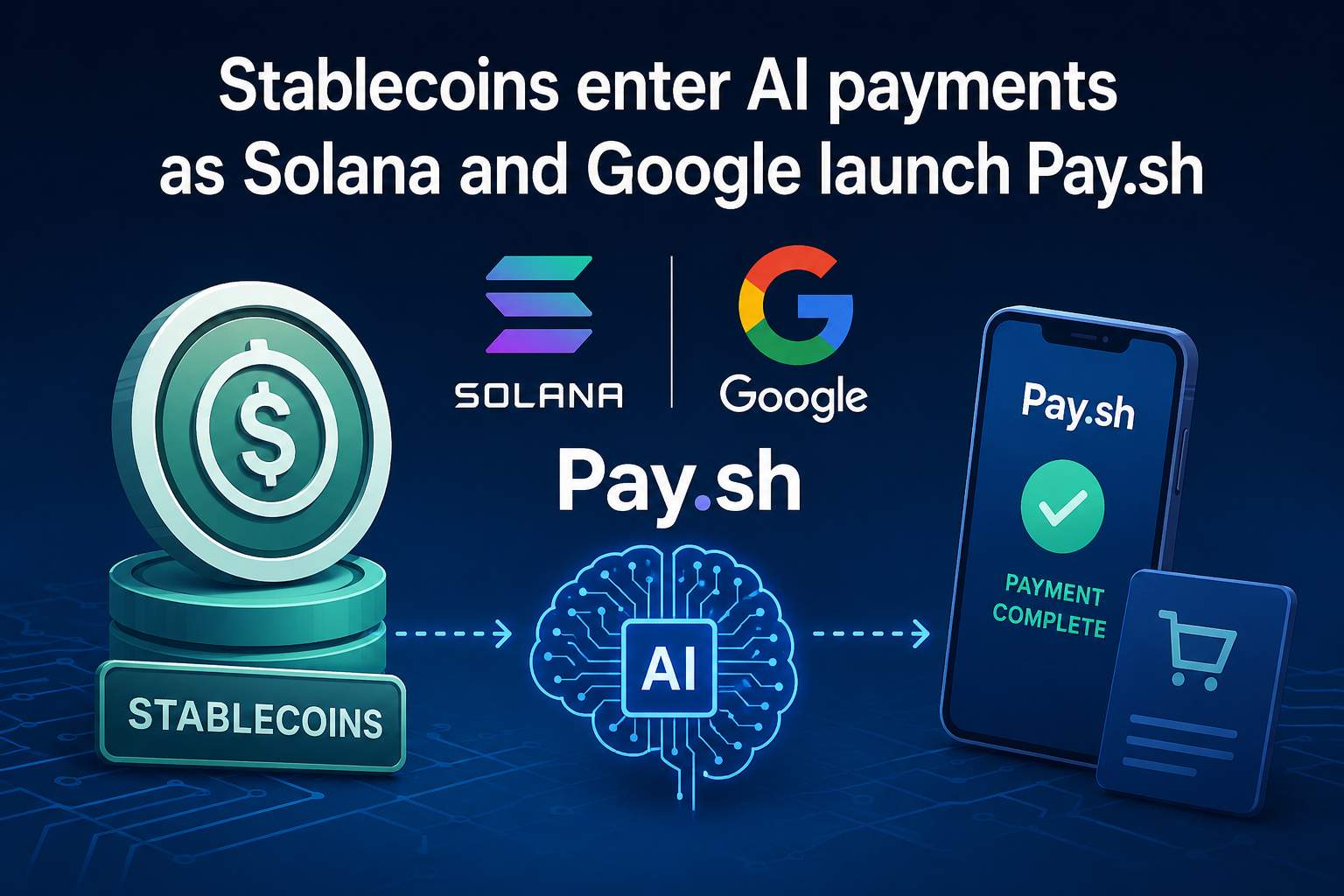
    The convergence of blockchain technology and artificial intelligence is ushering in a new era of digital finance, where speed, automation, and trustless systems are becoming the standard rather than the exception. In this rapidly evolving landscape, stablecoins in AI payments are emerging as a transformative force, enabling seamless, real-time transactions across decentralized and centralized ecosystems alike. The recent launch of Pay.sh, a collaborative initiative involving Solana and Google, signals a pivotal shift in how payments are processed, managed, and optimized in the age of intelligent automation.

    As businesses and developers increasingly explore AI-powered financial systems, the demand for reliable, low-volatility digital currencies has grown significantly. Stablecoins, designed to maintain a stable value by being pegged to fiat currencies or other assets, are uniquely positioned to meet this demand. By integrating stablecoins into AI-driven payment frameworks, platforms like Pay.sh aim to eliminate inefficiencies, reduce transaction costs, and unlock new possibilities for machine-to-machine commerce.

    This article explores the implications of stablecoins entering AI payments, the role of Solana and Google in launching Pay.sh, and how this innovation could redefine the future of global finance.

    The Rise of Stablecoins in Digital Payments

    Stablecoins have evolved from niche crypto assets into essential components of the broader financial ecosystem. Their ability to combine the benefits of blockchain—such as transparency and decentralization—with price stability makes them ideal for everyday transactions.

    Unlike volatile cryptocurrencies, stablecoins for payments offer predictability, which is crucial for both consumers and businesses. This stability enables their use in a wide range of applications, from cross-border remittances to e-commerce and now, increasingly, AI-driven payment systems.

    The integration of stablecoins into digital payments has been accelerated by the need for faster settlement times and lower transaction fees. Traditional financial systems often involve intermediaries that slow down transactions and increase costs. Stablecoins, on the other hand, allow for near-instant transfers with minimal fees, making them highly attractive for modern payment solutions.

    Understanding AI Payments and Their Growing Importance

    AI payments refer to the use of artificial intelligence to automate, optimize, and enhance financial transactions. These systems can analyze data in real time, detect fraud, personalize payment experiences, and even execute transactions autonomously.

    The concept of AI-driven payment systems is gaining traction as businesses seek to improve efficiency and customer experience. For instance, AI can enable smart billing systems that automatically adjust pricing based on usage or demand. It can also facilitate autonomous transactions, where machines pay for services without human intervention.

    However, for AI payments to function effectively, they require a reliable medium of exchange. This is where stablecoins come into play. Their stability and programmability make them ideal for integration with AI systems, enabling seamless and secure transactions.

    Solana and Google’s Pay.sh: A Game-Changing Collaboration

    The launch of Pay.sh marks a significant milestone in the evolution of digital payments. By combining Solana’s high-performance blockchain with Google’s advanced AI capabilities, Pay.sh aims to create a robust platform for stablecoin-based AI payments.

    Solana is known for its scalability and low transaction costs, making it an ideal blockchain for handling high volumes of transactions. Its ability to process thousands of transactions per second ensures that Pay.sh can support real-time payment processing without bottlenecks.

    Google, on the other hand, brings its expertise in artificial intelligence and cloud computing to the table. By leveraging AI algorithms and machine learning models, Pay.sh can optimize payment flows, detect anomalies, and provide intelligent insights to users.

    This collaboration represents a fusion of two powerful technologies—blockchain and AI—creating a platform that is greater than the sum of its parts.

    How Pay.sh Works: Bridging Stablecoins and AI
    Stablecoins Power AI Payments with Pay.sh Launch

    Pay.sh operates as a unified platform that integrates stablecoins into AI-driven payment workflows. At its core, the platform enables users and machines to send and receive payments using stablecoins, while AI algorithms handle the complexities of transaction management.

    One of the key features of Pay.sh is its ability to facilitate machine-to-machine payments. For example, an autonomous vehicle could pay for charging services using stablecoins, with the transaction being executed automatically by an AI system.

    The platform also supports smart contracts, which are self-executing agreements coded on the blockchain. These contracts can automate payment processes, ensuring that funds are released only when specific conditions are met.

    By combining stablecoins with AI, Pay.sh eliminates the need for manual intervention, reduces errors, and enhances the overall efficiency of payment systems.

    Benefits of Stablecoins in AI Payments

    The integration of stablecoins into AI payments offers numerous advantages that could reshape the financial landscape.

    One of the most significant benefits is transaction speed. Stablecoin transactions on high-performance blockchains like Solana are processed almost instantly, enabling real-time payments. This is particularly important for AI systems that require immediate execution of transactions.

    Another key advantage is cost efficiency. Traditional payment systems often involve high fees due to intermediaries. Stablecoins eliminate these intermediaries, resulting in lower transaction costs.

    Security is also a major benefit. Blockchain technology ensures that transactions are transparent and tamper-proof, while AI enhances security by detecting fraudulent activities in real time.

    Additionally, stablecoins enable global accessibility, allowing users to participate in digital payments without relying on traditional banking infrastructure.

    The Role of Blockchain in Enabling AI Payments

    Blockchain technology serves as the foundation for stablecoin-based AI payments. Its decentralized nature ensures that transactions are secure, transparent, and resistant to censorship.

    One of the key features of blockchain is its ability to support programmable money. Stablecoins can be programmed to execute specific actions under certain conditions, making them ideal for integration with AI systems.

    Moreover, blockchain provides a reliable ledger for recording transactions, which is essential for auditing and compliance. This transparency builds trust among users and ensures the integrity of the payment system.

    As AI continues to evolve, the role of blockchain in enabling intelligent financial systems will become increasingly important.

    Challenges and Risks in Stablecoin AI Payments

    Despite their potential, stablecoins in AI payments are not without challenges. One of the primary concerns is regulatory uncertainty. Governments around the world are still developing frameworks for regulating stablecoins, which could impact their adoption.

    Another challenge is security risks. While blockchain is inherently secure, vulnerabilities can arise in smart contracts or AI algorithms. Ensuring robust security measures is essential to prevent potential breaches.

    Scalability is also a concern, especially as the adoption of AI payments grows. Platforms like Pay.sh must be able to handle increasing transaction volumes without compromising performance.

    Additionally, there are concerns about data privacy. AI systems rely on large amounts of data, raising questions about how this data is collected, stored, and used.

    Future Implications of Pay.sh and Stablecoin Integration

    The launch of Pay.sh could have far-reaching implications for the future of digital finance. As stablecoins become more integrated into AI payments, we can expect to see a shift towards fully automated financial ecosystems.

    In such ecosystems, transactions could be executed seamlessly without human intervention, enabling new business models and revenue streams. For example, subscription services could be managed entirely by AI, with payments being processed automatically based on usage.

    The integration of stablecoins and AI could also drive innovation in areas such as decentralized finance (DeFi), e-commerce, and supply chain management.

    As more companies adopt these technologies, the demand for scalable and efficient payment solutions will continue to grow, further accelerating the adoption of platforms like Pay.sh.

    The Competitive Landscape and Industry Adoption

    The entry of stablecoins into AI payments is likely to intensify competition among technology companies and financial institutions. As Solana and Google take the lead with Pay.sh, other players are expected to follow suit, developing their own solutions for AI-powered payments.

    This competition could drive innovation, leading to the development of more advanced and user-friendly payment systems. It could also encourage collaboration between different sectors, such as fintech, blockchain, and artificial intelligence.

    Industry adoption will depend on factors such as regulatory clarity, technological advancements, and user trust. As these factors evolve, the adoption of stablecoins in AI payments is expected to increase significantly.

    Conclusion

    The integration of stablecoins into AI payments represents a significant step forward in the evolution of digital finance. With the launch of Pay.sh by Solana and Google, the industry is moving closer to a future where payments are faster, more efficient, and fully automated.

    By combining the stability of stablecoins with the intelligence of AI, platforms like Pay.sh are redefining how transactions are conducted. While challenges remain, the potential benefits far outweigh the risks, making this a promising development for businesses and consumers alike.

    As the adoption of stablecoins in AI payments continues to grow, it is clear that this innovation will play a crucial role in shaping the future of global finance.

    FAQs

    Q. What are stablecoins and why are they important in AI payments?
    Stablecoins are digital currencies pegged to stable assets like fiat currencies. They provide price stability, making them ideal for AI-driven payment systems that require consistent value.

    Q. How does Pay.sh integrate AI with stablecoin payments?
    Pay.sh uses AI algorithms to automate and optimize payment processes while leveraging stablecoins for fast, secure, and low-cost transactions.

    Q. Why is Solana used for Pay.sh?
    Solana offers high scalability and low transaction fees, making it suitable for handling large volumes of real-time payments in AI systems.

    Q. What are the risks of using stablecoins in AI payments?
    Risks include regulatory uncertainty, security vulnerabilities, scalability challenges, and data privacy concerns.

    Q. What is the future of stablecoins in digital payments?
    Stablecoins are expected to play a major role in enabling automated, AI-driven financial ecosystems, transforming how transactions are conducted globally.